The Nova Testimony

https://novaexhibition.com/london-exhibition

On Tuesday I visited the Nova – I don’t want to call it ‘exhibition’ – rather, I’ll say I visited the Nova Testimony, because testimony is what it truly is. In whatever state you walk in, through the necessarily tight security, you walk out different.

I shall not try to describe the testimony. The evidence is taken, all of it, – objects, pictures, videos, recordings, – directly from the grounds of the Nova Festival at Re’im, or from survivors and rescuers shortly afterwards. It would be as inappropriate as it is impossible to put all this into words. The testimony needs to be seen, heard and witnessed.

But I shall mention three features that struck me.

I never thought about what that festival meant prior to 6.29am on that appalling morning of October 7. I’m not a dancer, so I was all the more struck and smitten by the joy of so many people rejoicing together in music they love. And when the sun rose that dawn over those who had danced all night, the whole space glowed with wonder. Nor had I realised that this was an EcoNova Project, banning single use plastics and creating a green culture with a dedicated team ensuring ‘commitment to Mother Earth.’ Then, at 6.29, came the missiles, followed by the murderers.

I had met Romi Gonen’s father in early 2024. ‘There is only one phone-call I want to hear,’ he said. For everything else he had no interest in his phone whatsoever. I rejoiced when, a further terrible twelve months later, Romi, a passionate student of all kinds of dance, returned from captivity to the embrace of her family. We put a picture of her with her mother in the synagogue. But I had before heard the call she made to her mother while trying to hide in the terrible minutes before she was taken hostage. Romi’s mother says, and repeats in desperation: ‘Everything is going to be Okay. I’m with you, sweetie…’

I knew only small parts of the extraordinary work of care and healing that survivors, those who saved others, and supporters have undertaken since 2023. ‘Despite my trauma I had to help others,’ testifies one courageous rescuer. As, with an aching heart, one leaves the room with all the pictures of the dead, one is guided through the work of healing to which the Nova community has committed itself since just two months after the horrors. They support the ‘hundreds of families [who] must now navigate the desolate landscape of insufferable loss and unending longing, desperate for the presence of those they can no longer embrace.’ As The Tribe of Nova they have established workshops, healing centres, memorials, and therapeutic activities including horse riding, surfing, nature trips, sound and meditative healing and the provision of emergency micro grants.

The Nova Exhibition / Testimony is about remembering and preserving the spirit of the 413 people, mostly under the age of 25, who were murdered there:

‘We will forever remember the beautiful angels who shined on the dancefloor and are now dancing in heaven. Your light will never be extinguished.’

But it is no less about working for a world of healing and hope, a world in which We Will Dance Again:

We are the flame

That remembers

The voice

That carries healing

Into the world

We are here

We are Nova

You can support Nova’s healing work through the UJIA, specifying that your donation is for Nova. The UJIA helps fund retreats for Nova survivors. These include Group Therapy and professionally facilitated Sharing Circles, led by clinical social workers and therapists, providing a safe space for participants to share experiences, process grief and trauma, and build mutual support within the group.
World Ocean Day 2026

‘Deep calls to deep to the roar of your cataracts.’ Psalm 42:8

Yesterday, 8 June, was World Ocean Day. Time and again the Tenach, the Hebrew Bible, expresses wonder at the vast mystery of the oceans and the creatures who live in their depths. ‘Were you there when I made the earth?’ God challenges Job. Do you know who instructed the seas: ‘Hitherto shalt thou come, but no further: and here shall thy proud waves be stayed.’ (Job 38:11) The seas have aways been a source of wonder, danger, might and beauty.

When I was a teacher, we took the whole primary school of two hundred children from Neasden and Harlesden to the coast so that none of them should grow up without ever having seen the sea. For those of us privileged to walk along the cliffs and beaches, the crashing tides battering the rocks below with their high spurting spume, and the song of the small waves as they draw shells and crabs and seaweed back into the tide, are as exhilarating and as mesmerising and as if the current was also within us, storming, cleansing and calming the mind.

Keats’ sonnet Bright Star is inspired by the mysteries of the ocean, as he hears

The moving waters at their priestlike task

Of pure ablution round earth’s human shores.

But those waters sadly no longer offer such purity. Even in the remotest coasts of Scotland, I’ve seen bags and bottles, ropes and rubbish washed ashore in ugly heaps. Meanwhile, trawlers plough the ocean bed, ripping up everything, destroying seascapes and bio-domains as yet unexplored. Hence Secretary General of the United Nations Antonio Guterres’ urgent challenge: ‘Humanity can count on the ocean, but can the ocean count on us?’

That is why World Ocean Day is so important. On January 17th of this year, the Global Ocean Treaty was finally established. Ratified by over 60 countries, it is hopefully in the process of being implemented by the UK through the Biodiversity Beyond National Jurisdiction Bill, which recently received Royal Assent. The treaty will enable the creation of vast sanctuaries covering as much as a third of the world’s seas.

It’s an opportunity to reimagine, says the UN website

The ocean has always flowed through us, in the air we breathe, the food we eat, and the climate that makes our lives possible. Now we are being called to reimagine that relationship. For the first time in a generation, humanity has chosen to govern a significant part of our shared ocean together.

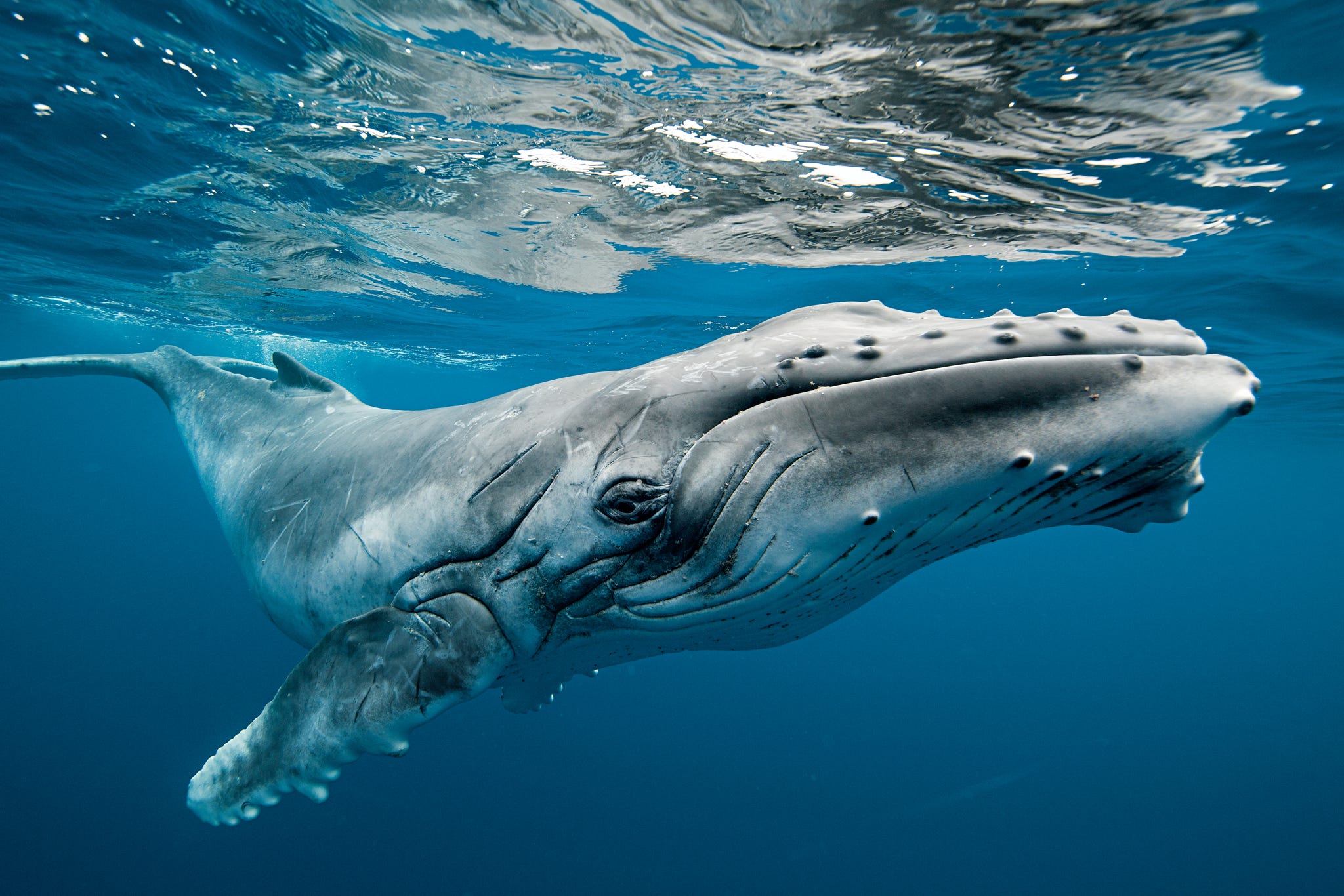
In his masterly Ocean, Earth’s Last Wilderness, Sir David Attenborough references a key moment of such reimagination, when in 1970 Roger Payne first shared his recording of the songs of humpbacked whales, 90% of which had by then been slaughtered:

‘For the first 30 seconds there is mumbling and giggling as the audiences get used to the deep rumbling groans and high-pitched squeaks. But leave it longer and the audience would go totally silent as if in a trance.’

Listen to the whale song here:

https://www.youtube-nocookie.com/embed/sjkxUA041nM?rel=0&autoplay=0&showinfo=0&enablejsapi=0

The songs transformed public attitudes, leading to a widespread ban on whale hunting. Today the deep seas hold many further mysteries, some of which we have glimpsed, and others of which remain as yet undiscovered. Maybe that is why, in a conclusion which has always puzzled me, Isaiah looked forward to the day ‘when the earth would be full of the knowledge of God as the waters cover the sea.’ (11:9) Perhaps he was likening wonder at what the seas conceal to nothing less than awe before the divine. The Zohar, the Book of Splendour, likens the call of the deep-sea cataracts to the flow of sacred energy as it descends from the ineffable to give life to everything that is. (Tikkunei Zohar 39a)

Our family has a favourite shore, the rocks and beaches of Gairloch in the Highlands. I have stood there with Nicky and the children many times, staring west at the setting sun, listening to the fall of the waves, partly frightened, partly overwhelmed, and partly carried into another dimension, somewhere infinite and timeless, by the vastness of the ocean and the sparkling glory of the reddening light.

World Ocean Day Online

https://www.youtube-nocookie.com/embed/ohcnAsXYPZY?rel=0&autoplay=0&showinfo=0&enablejsapi=0

– with EcoJudaism CEO Naomi Verber

https://unworldoceansday.org/calendar/the-ocean-gala-onboard-peace-boat-june-10

The Judaism We Need Now!

https://jonathanwittenberg.substack.com/api/v1/audio/upload/a17d26f5-ae3c-4747-ab01-880802af005a/src

I was invited to speak about the Judaism we need today for Yom Masorti, last Sunday, and feel so passionately about the subject that afterwards I recorded the gist of what I said.

Photo by John Cameron on Unsplash

Janine Stein kindly summarised my words:

The Judaism we need now is a Judaism of community, compassion, justice, truth, and serious commitment, rooted in deep engagement with tradition, while affirming the dignity of all human beings created in God’s image, and the preciousness of all creation. Such a Judaism offers not only resilience in difficult times, but a path towards a more hopeful future for the Jewish People worldwide and for society as a whole.

It is a Judaism that brings strength, joy, hope and purpose. It is a Judaism we need to live by, celebrate and fight for.

Thank God for the Rain

I love the sound of the first rains that break the hot drought, the heavy drops that crack hard against the windowpanes. I love the fine rain that one scarcely hears from indoors, so that one runs outside full of hope and spreads out one’s hands to test for wet and smells the earth’s freshness in the cool air. I love the drip, drip, drip of steady rain onto the dimpled surface of the pond, while the drops tumble down from the leaves of the overhanging branches and the small birds hop onto the lily pads to drink, then dart back into the bushes. I love the photo my wife brought home of the young Vietnamese boy dancing with joy in the street as the rain pours and down. I love the up-splash of the puddles on the paths where I run; I love to know that the desiccated land is drinking, that the thirst of the grasses will be quenched.

I love how the rabbis saw the fall of plentiful rain in its due season as one of three secrets to which only God holds the keys: the mystery of conception, the miracle of resurrection, and the renewal of the earth through the blessings of sweet rains. Rain brings back green to the yellowing fields, makes the weary leaves stretch out strong once again and soaks away the liminal fear of desertification and disaster. Now the small rivers won’t soon run dry, their fish will survive and the deer and the foxes will have somewhere to drink. Of course, there’s the danger of flooding, but that’s not uppermost in the south of England after two months of almost rainless weather.

How we squander precious water, as if the supply were guaranteed and infinite! ‘You know how precious water is,’ a Muslim colleague told me, ‘When you’ve lived in a country where the women walk twelve kilometres to the well and twelve back with full pitchers on their shoulder, then share the water they’ve carried with their neighbours.’

Therefore, the rabbis taught, go outside when the long awaited rains finally come and be thankful and say, ‘Blessed be the One who is good and does good.’ Amen, and amen again.

Get in touch...