2026 Earth Day

My father loved the natural world; he adored his garden. In the last days of my father’s life my brother turned his bed so that his closing view of the world would be that garden he so carefully tended. As it happens, today, Earth Day 2026, is the anniversary of his death.

Therefore, I will focus on what my father saw through that window – the trees.
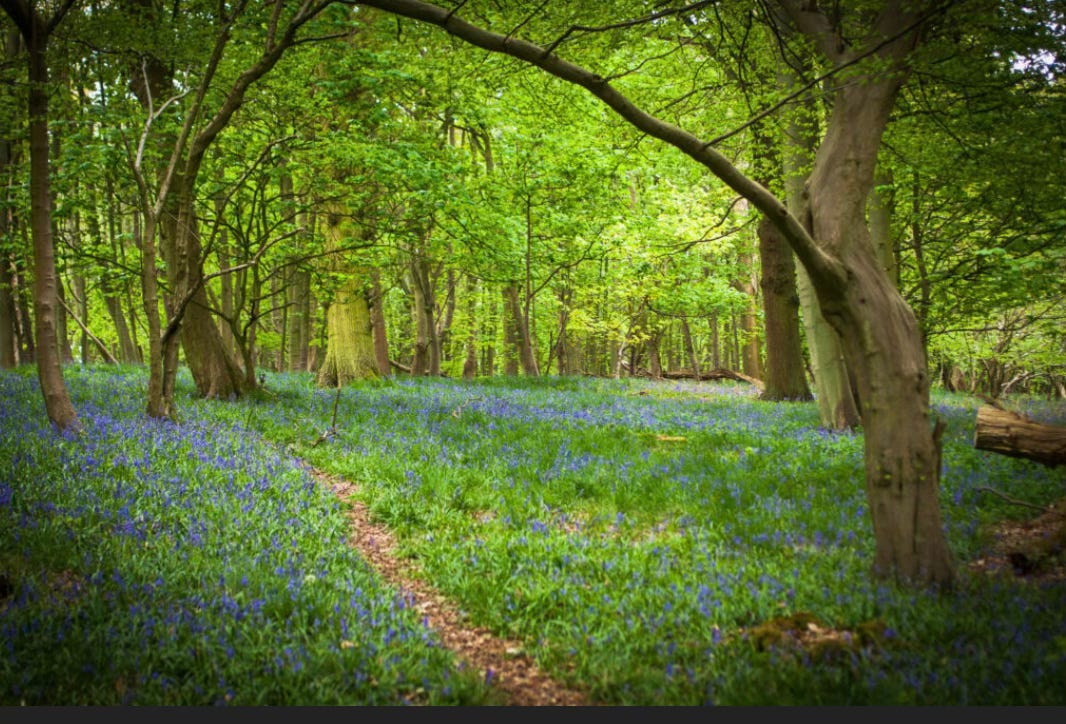
I have always liked trees, but that fondness has grown through the years into deep love and respect. Ancient trees are like beneficent sages in our instant-gratification world. They slow us down and, without words but in a language which our spirit recognises, call us to be mindful. Stopping still among the trees, especially at night, when the rushing world grows quieter, we feel ourselves connected to a deeper and greater life. These are the hours which the mystic, Rebbe Nachman of Breslav, described as the time of the sifting of the spirits and their purification.

That is why, when I have the opportunity, I like to be among trees at night. Sometimes I have to walk for hours before the noisy discourse in my mind grows weary of itself and I begin to listen. I fantasise that the trees I pass in the meantime have the forbearance to understand: ‘It’s not worth talking to him now; we’ll wait until he’s ready to hear.’ The patience of trees outlasts that of humans not by hours but by decades and centuries. Then the moment comes: I pause beside a birch tree, halt on the woodland path, stop at the corner of a field beneath a solitary oak, wonder at a stand of old Scots pines, wind-bent survivors of the massacres of the forests, because my spirit has become still enough to hear the trees calling to me to stop and listen.

Trees have their own language: their vocabulary is formed from the hidden riches of the earth, from subterranean microbes and fungi, from the minerals and water they draw up from far beneath the ground. What they say is what they are: their quiet drawing up of life out of the elements of soil and water, their breathing out of life-preserving air, their reaching forth with twigs and leaves into the light, their letting go of their yellow and amber leaves in autumn, their long, bare patience in the bough-beaten winter, their steady provision of refuge to the homeless birds and restless squirrels, their gift of shade from their canopies above, the nesting holes they offer in the cups and cavities of bark and branch, and the reassuring consolation of their interwoven root work. We humans, too, are sustained on every level by these ancient communities of trees.

Alan Simons, a deeply missed member of my community who died too young, wrote to his sister when he was a first-year student and she was just nine:

‘Listen to the trees, for they have much to teach us. The trees were here before we came and will be still when we leave. So, treat them kindly for they are old and wise… Listen to them talking to the wind as you lie in your warm bed… for you may find joy in their conversation…. It does us good [to remember] those places where there is strength and stillness.’

All this is why I am distraught by the needless destruction of trees and why I am passionate about the restoration of our forest here in the UK and across the world.

Suzanne Simard opens her remarkable work Finding the Mother Tree with the acknowledgement that it is ‘not a book about how we can save the trees,’ but ‘a book about how the trees can save us.’ We need the trees to save us physically, mentally and spiritually.

Twice, while I sat with him in the closing days of his life, my father, who was seemingly no longer conscious, sat up momentarily in his bed and said the words from the daily Jewish liturgy: ‘God keeps faith with those who sleep in the dust.’ I could not ask him how he understood those words, but I take them as a deep belief in the continuity of life. I imagine that’s what he saw in the trees in his beloved garden: ‘They will be there for my children’s children, and for all the generations, brining life and hope to this crazy, rushing, fragile world.’

That is why I’m determined to be a tree planter, not a tree uprooter. I’ve planted trees in London with Thames 21, in Essex with The Woodland Trust, and with people of different faiths in Israel. I often think of the poet Rachel’s beautiful lines about what her life has meant to her:

Just a tree my hands have planted by the Jordan’s quiet shores

Just a path my feet have trodden upon your earth.

That, too, is why I’m running the London Marathon MyWay route for Tree Aid, to support people, especially women and children, and the climate, the birds and the animals at the same time.

May peace return, and all the trees, and all peoples, thrive. May this Earth Day bring blessings to all life.

Support my run for Tree Aid. Trees have the communicative roots and sheltering branches to protect the future of all life.
Yom HaZikaron

Today is Yom HaZikaron, the Memorial Day for the dead in Israel’s wars.

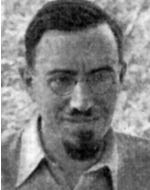
Freiman, Dr. Avraham-Chaim (Alfred)

No family is unaffected. My father’s uncle, Alfred Freimann, was among those murdered in the shayarah, the convey of academics on its way to the Hebrew University campus on Mount Scopus, when it was ambushed on 13 April 1948 and everyone was killed. (https://honorisraelsfallen.com/fallen/freiman-dr-avraham-chaim-alfred/) He was a leading jurist, involved in preparations for Israel’s independence. I cannot imagine the impact this had on my father, who was in the Haganah in the siege of Jerusalem, in that grim, courageous year. ‘I lost many friends in the Old City,’ he would say. His Yahrzeit falls on Yom ha’Atzmaut.

I’m thinking today of many friends: Raba Tamar, whose brother lost his life in Tsahal; Aaron Barnea, who lost his son in Lebanon; Rami Elchanan and Bassam Aramin, fellow leaders of the Parents Circle, who each lost a daughter to terror; Sharone Lifschitz, whose father was murdered in Gaza; Steve Brisley, whose sister Lianne was murdered with her daughters on October 7; the Hathaleen family whose brother Awad was killed by violent settlers.

That is why I have lit a candle here at home and have made a list of friends to call during the day. It is also why, last night, I joined the members of our synagogue watching together the 21st Israeli Palestinian Joint Memorial Ceremony, ‘We Are the Day After.’ (https://www.familiesforum.co.uk/21-st-joint-memorial-day-ceremony)

What can I say, but the silence of an aching heart?

Women and men, Israeli and Palestinian, spoke of how violent death took away their loved ones, children, brothers, cousins; of how the horror of loss and the destruction of their homes shook their families. Unable to travel, most of the Palestinian participants testified by video.

Each person, every circumstance, was unique. But key feelings were not:

‘I was brought up to respect all life;’

‘I asked myself, “What do I do with my grief?”

‘I joined the Parents Circle, because here I can speak of my loved one, and people understand.’

‘We have the same grief in our hearts;’

‘Here is where I feel hope: in the end, we will find a way to live together in peace.’

As the organisers bravely wrote:

This year we gather in a burning reality – war, death, rockets, oppression and injustice on all sides. Despite everything and in fact because of everything we choose to look forward. The joint ceremony does not seek to compare losses or measure pain but to recognize that every life taken was a whole life with dreams, with family and with a future cut short. Together we chart a path that acknowledges pain but refuses to surrender to it. A path of humanity, solidarity and hope.

What can one add, but the silence of an aching – yet somewhere hopeful? – heart?

As we read about healing

The painful nature of these days between Yom HaShoahYom haZikaron and Yom ha’Atzamut has been brought home by the appalling antisemitic attack against Finchley Reform Synagogue, down the road from my own community. I feel for their clergy, lay leaders, and all the congregation, and have written to them in solidarity.

It can’t be by chance that this week’s Torah reading concerns healing. The descriptions of the diseases may seem abstruse and dated: red, green and white creeping sores eating away at living flesh, infected clothing and even the walls of buildings. But the hurts across the body of humanity, and of life itself, are real and rife, and the need for healing is as urgent now as ever.

selective focus photography of woman holding yellow petaled flowers
Photo by Lina Trochez on Unsplash

Such healing must be threefold. What can I say about personal pain? It wouldn’t be right for me to record the details of the conversation at our shabbat table last week between a Ukrainian couple and an Israeli family devastatingly affected by October 7. I only note that they found plenty to share in heartfelt words, and in fellow feeling that words will never capture. What can I say about when I went to thank the man who prayed with me for his family in Beirut and mine in Israel? ‘What do you hear about your dear ones?’ ‘Lost,’ he whispered. Unsure if I heard right, I asked again: ‘Just lost,’ he said, ‘Lost.’ In the Torah, the Cohen who inspects diseased persons requires them to go into isolation for a period of potential incubation, before bringing them back into the community. In our day the isolation, the inexpressibility of pain and trauma, the inner loneliness, is all too real. The question is whether we can we create community with enough sensitivity and heart to include those who bear these deep wounds and, without inflicting further pain, embrace them in our lives.

We need deep healing both across the Jewish Diaspora and in Israel. The Torah speaks of breaking apart those buildings which show ongoing signs of disease across their walls. We are in an opposite position. How can we rebuild after the devastation of war, in Beer Sheva, Haifa, Tel Aviv? I recently officiated at the wedding of a couple whose flat was largely destroyed. How sorely relevant were the traditional words about building ‘a faithful home in Israel.’ Harder is the question of how we can rebuild destroyed houses in the West Bank, like the homes in the village of Khallet a-Sidra, destroyed by Jewish extremists, which the army is preventing the families who lived there for years from rebuilding. This has to be wrong. Harder still is how trust, hope and belief in our shared humanity and future can be restored, for Israelis and Palestinians, Jews and non-Jews alike, not just in Israel but wherever we are in the world. There is too much hurt, and too much hate, plenty of it directed at us too. Every word, every deed that expresses and deepens our shared humanity matters immensely. I hardly dare call this healing, but at least it may mitigate the hurt.

As humanity, as life on earth, we desperately need healing. I think of the Torah’s words ‘I am God, your healer,’ and ask myself, ‘Who is that “you”?’ It’s not just people; it is all life. ‘The earth is God’s’ said the poet of Psalm 24. That includes the rainfall and rivers, the soil and all that it sustains, the tall trees of the forests and their vital underbelly of shrub and scrub, ground nesting birds, beetles and even ants. The Torah instructs us to rip the diseased fabric from an infected garment if the rest of it can be saved. But we are here altogether on this earth, interwoven in one web of destiny, and no single part of life can be isolated and torn away from the rest. If we poison one domain, we allow that poison to seep slowly into us all. Time and again the Torah repeats the word ‘tahor,’ pure; the role of the priest is letaher, to help the ill and inured back to a state of health and purity. I used to think tahor was merely an outdated term for an ideal ritual state. Now I understand the word more truly and see little more urgent that the cleansing of our way of life to allow the very earth to become pure and wholesome once again.

The task of healing is immense. The Torah delegates it to the priests, the Cohanim. Contemporary reality demands it of us all.

May this Yom ha’Atzmaut, on which we celebrate all the many positive achievements of Israel and our People, mark a significant turn on the path to true healing.

Strength in Compassion, and Compassion within Strength

It’s hard to find hope and resilience in difficult days. That’s true, whether times are tough because of personal struggles, because of what’s happening in the world around us, or because of both at the same time. ‘Where’s the hope?’ is not just a question others ask me almost daily, but one I ask myself when inspiration seems as elusive as an alchemist’s search for the magic stone. The prayers put it bluntly: ‘What is our life? Our kindness? Our fairness? Our strength?’ Basically, what’s the point?

I get help from the mystical interpretation of the Counting of the Omer. To explain, the Omer is a dry measure, in this case of barley, and the ‘Counting of the Omer’ is the enumeration, day by day and week by week, of the seven weeks of harvest connecting Pesach with Shavuot. This represents the journey from Egypt to Sinai, from ‘freedom from’ to what that freedom is for. The period includes the grief of Yom HaShoah, Holocaust Memorial Day; the heartache of Yom HaZikaron, the Memorial Day for the dead in Israel’s wars and conflicts; and the hopes, fears, and anguish connected with Yom Ha’Atzmaut, Israel’s Independence Day. It’s not a simple stretch of time.

Image by Priscilla Du Preez 🇨🇦

But what engaged the mystics was neither harvest nor history. Rather, they understood the Omer as a journey of the spirit ever deeper into the heart of the sacred. They devoted each of the seven weeks to one of the sacred qualities with which they understood all creation to be imbued. They dedicated the first week to Hesed, lovingkindness, and the second to Gevurah, strength. Within each week, they attributed a special quality to each day. Thus, the second day of week one is Gevurah shebaHesed, strength within love, while the first day of week two is Hesed shebiGevurah, love within strength.

Strength within love, love within strength: these challenging combinations grip me. How does one retain compassion in a brutal world? When power and force dominate, how does one still find space for kindness and love? What’s it worth, in a bombed-up world?

Then I remember: I’m writing at a cafe two doors down from where a man from Beirut, who asked not to be named, prayed with me not just for his own family, but “for everyone, whoever they are, whichever side of the border they are, that we may live together in peace.”

That’s loving kindness, despite power and conflict.

I remember, too, the carer who told me how she keeps going while looking after an elderly woman who constantly tells her exactly what to do, criticises her loudly if she fails to comply to the letter but never saying ‘thank you.’ ‘I go far down into myself. I find the inner pool of love. It’s hard to go deep enough sometimes, but the stream that feeds it never runs completely dry. Even when I can’t feel it, I know it’s flowing into my heart.’ That’s strength within love.

I remember, also, how when I opened my emails there was a video about the power of music: wildlife wardens were singing to orphaned elephants to comfort them after poachers killed their mothers and the ‘little ones’ came and let themselves be stroked.

Then I look out into the garden and recall the blessing we said over fruit trees earlier in this month of Nissan. I think of the Ukrainian family whose orchard was bombed, but who’ve planted a plum and a cherry tree in pots on their London balcony. It’s a small but significant fight back: ‘We may be uprooted, but our faith in life will be replanted.’

I realise that all around are people who find strength within love and the love to remain strong and I’m moved, inspired and restored.

This War

Just to say that I am horrified by the suffering of millions of civilians, and appalled at the thought of what has now been threatened. Innocent people caught in this war in Iran, Lebanon, Israel, in the West Bank, and beyond, are in my prayers. And all the nature that is being destroyed.

I fear no good will come from this and pray that better ways are found to end the nuclear threat and bring freedom, justice, dignity and peace.

Apropos the Song of Songs

and in praise of my mother-in-law

One of my mother-in-law’s special qualities, and she has many, is that she always says thank you. She’s ninety-four and needs a fair amount of assistance. People are more than willing to offer it, because she never fails to express her appreciation. She even thanked me for being a really good son-in-law, which I have done little to deserve. She should thank my wife, who truly is an excellent daughter, as is her sister, as are her brothers who are brilliant sons. But then she does thank them, and her carers, all the time, for every small act. That’s what I call gracious living, more so by far than sipping champagne over breakfast at some tropical waterfront hotel. Judaism has a phrase for it, hakarat hatov, acknowledging what’s good, honouring life’s blessings and never taking them for granted, however ordinary they might appear.

IMG_3586.jpeg

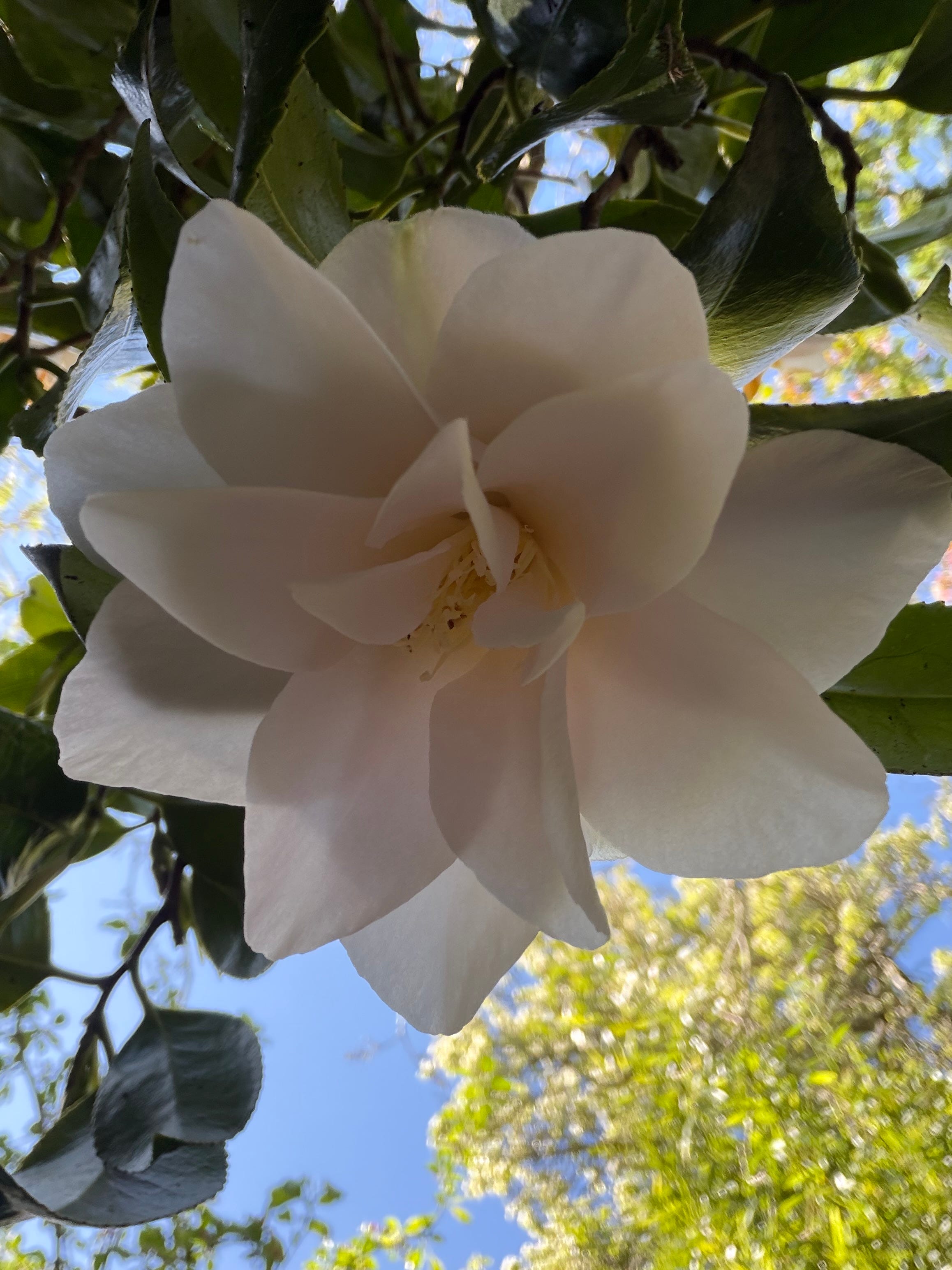
Anyway, enough of generalities. This morning we took my mother-in-law to the park. I kept having to redirect her wheelchair and point it in the right direction, because my wife kept saying, ‘Look! Look at that camelia, with the pale stripes on its red flowers. Look at that white one!’ ‘Beautiful,’ said my mother-in-law. ‘See those buds on the Judas tree (Crown of the Forest it’s called in Hebrew, a far nicer name.) Another week, and it’ll be covered in purple blossom.’ ‘Beautiful,’ said my mother-in-law. ‘Look there at those violets,’ I said, sensing it was my turn.’ ‘Wonderful,’ said my-mother-in-law. In case you form the impression that some kind of memory loss has reduced her vocabulary to this small range of generous adjectives, you would be totally mistaken. She’s as astute and attentive as ever, apt to pick up other people’s entire life-stories in a tenth of the time it would take most of us, and as interested in life, and every small detail of what her children, grandchildren and great-grandchildren do, as ever.

I mention all this not only because I deeply admire my mother-in-law’s capacity always to see the good. (When she and my father-in-law had a serious car accident on the way from the airport up to Jerusalem and her visit to Israel was reduced to a month in the Hadassah Hospital, she observed that she had been enabled to see sides of the country which few others had.)

I reference this also because last Shabbat we read the Song of Songs. That most wonderful of love poems is about noticing, the lily among the thorns, the deer hiding behind the latticework, the half open blossom on the nut trees, the tiny embryo figs on the branch. The world, through the eyes of young love, is beautiful, gorgeous, entrancing. And why should we forget that, even when we grow old?

Last week I was on a panel at the amazing ChangeNOW climate and nature conference in Paris. There were three of us faith leaders, together with Karenna Gore and Satish Kumar. Satish made the whole crowd rise and sing with him ‘The world is beautiful. There is beauty around me, beauty above me, beauty behind me…’ I admit to reflecting that this simply isn’t true. Just think of the wars, the bombs, the killings, the vast devastation. But then, if we remember that the world truly is in essence beautiful, we may take more deeply to heart what it means to destroy life, the wounds we cause, the ruin we leave in our wake, and vow even more earnestly to do our utmost never to let this happen again.

So I try to take a leaf out of my mother-in-law’s book, or rather I should say, garden. I try to notice and appreciate more. I admit that when I set off down the road in the morning, I say hello to the animals. ‘Morning, blackbird.’ ‘How are you doing, magpie?’ I start my day by filling their feeders; I would hate to know that they could find no breakfast after singing their salutations to the dawn. If other people think that I’ve lost it, so what? Most of them won’t hear anyway; they’ve got devices plugged into their ears. I say a quiet ‘good morning’ to the people I pass too. Most of them look straight ahead, unheeding. Others probably think I’m weird; this isn’t how Londoners behave.

But why shouldn’t I be grateful for the birds, or for God, or the spirit, or life, or whatever, that has made us, humans, crows, foxes, dogs, goldfinches, companions? If I notice the birds with appreciation, maybe they’ll notice me with something other than visceral fear. Maybe they, in their own way, are saying ‘Thank you; good to be together on this earth.’

‘Look over there at those grape hyacinths,’ says my wife. ‘I love those ones with the darker blue below.’ I turn the wheelchair to face the right direction. ‘Wonderful,’ says my mother-in-law.

Thought for the Day on the Eve of Pesach

Tonight is Seder night, the start of Passover, the Jewish Festival of Freedom, when we recall the Exodus from Egypt, our people’s journey from slavery to freedom. It’s a story which embraces all our stories. My mother, aged a hundred, tells how she escaped Nazi Europe. A woman whose husband is imprisoned in the Congo says, ‘May God who freed your people, free him.’ A Muslim guest who fled for his life stands up and exclaims: ‘Your story is my story too.’

For, far from free, so much of the world suffers beneath oppression and war.

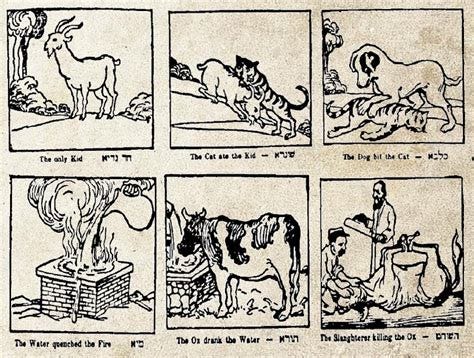
Maybe that’s why the Seder ends with a song, Chad Gadya, which means ‘one little goat’ in Aramaic. It’s a ditty in the style of The House That Jack Built: a cat eats the goat, dog bites cat, stick hits dog, fire burns stick, water quenches fire, cow drinks water, butcher kills cow, the angel of death despatches the butcher. But then comes God and slays the angel of death.

Chad Gadya

I have a vivid memory of my grandfather, aged and weak, catching my eye and whispering at what he knew would be his final Seder, ‘after death comes God.’ That was his faith, his hope.

But does God have the last word in our violent world? It hardly feels that way today. I phone family in Jerusalem: we’re in and out of bomb shelters. My heart goes out to them. I call an Iranian friend: ‘No word from my sisters in Tehran.’ ‘My hometown’s just been bombed,’ a Ukrainian acquaintance texts me.

So that Chad Gadya song feels like a metaphor for history, only it’s not goats and cats, but humanity who’s the victim. In their heart-rending shared memorial service, bereaved Israeli and Palestinian families sing that song in Hebrew and Arabic together.

Yet, I still see my grandfather’s face and hear his whisper: after the angel of death comes God; life is greater than death.

But I hear those words as a question: What world is this? What do we want it to be? Of death, or life; oppression or freedom; cruelty or compassion?

I pray this Passover will truly mark our journey towards freedom, so that we can celebrate God’s world together, knowing that the same sacred spirit flows through us all, whatever our faith or nationality, giving life to all that breathes.

We’ve had too much of cat eating goat, human devouring human. May this Festival of Freedom mark our liberation from hatred, violence and fear, for my people, and every people.

Night

The Seder must be conducted at night.

The Haggadah makes repeated reference to night, most famously in the four questions: ‘How is this night different from all other nights?’

This is not just about timing. Night is a metaphor for the darkness of the challenges through which we have to struggle. Yet, like the five rabbis who debated the Exodus until their pupils came to tell them that it was time for the morning prayers, we do not give up until a new dawn has broken.

This symbolises the deep resilience of Judaism and the human spirit. We need that resilience now as much as ever, in these frightening times.

https://www.youtube.com/watch?v=k-QsVUPF2XY

Get in touch...