Torah from a Heat Wave

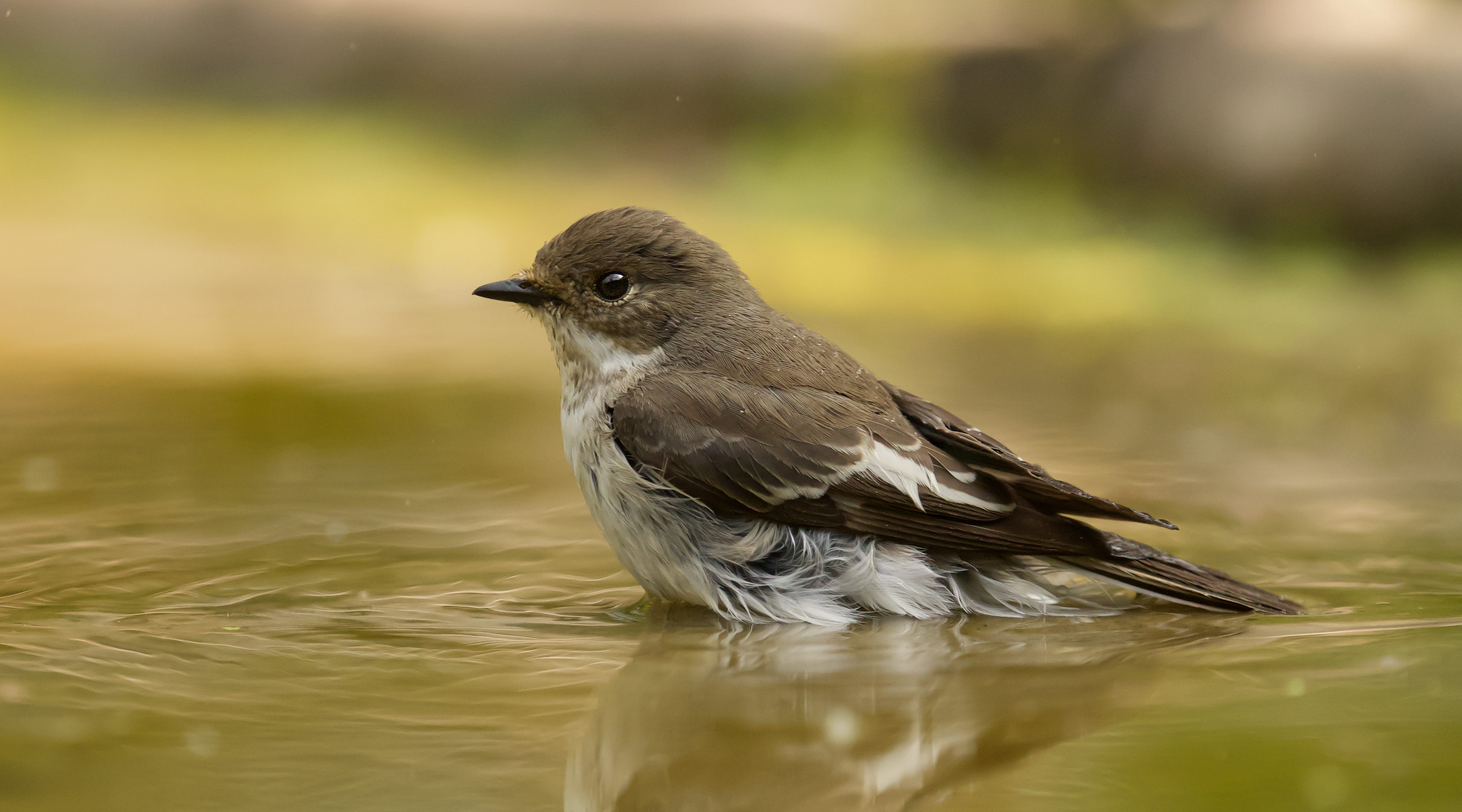
I catch a glimpse of tiny wings. I sit down quietly to watch. The little birds, – blue tits, great tits, a sparrow, – hop from the yew tree onto the floating leaves in the pond. Quickly they dip their heads, fill their beaks, then skip back up to the safety of the branches. Another darts down, then another, glances round, drinks, opens its wings and disappears. The birds are beautiful. I am so glad we have water for them on this scorching day. I keep still and feel:

‘This is how God speaks to us.’

That’s why I love this short teaching by Rebbe Yehudah Aryeh-Leib Alter of Ger, a favourite Hasidic master:

Torah is the vitality which sustains the works of creation.

Blessed be God who speaks and acts:’ this refers to the works of creation, created by the Ten Utterances.

Blessed be God who decrees and preserves:’ this refers to the Ten Commandments by which the world is preserved. (Shavuot in the year 5631/ 1871)

Image by wirestock on Magnific

The words in italics are quotes from the prayer Baruch She’amar, which opens the ‘verses of song’ near the start of the daily morning service. They’re an invitation to listen, and join, the songs and meditations of all the worlds.

The Ten Utterances are the ten times God says, ‘Let there be’ in the hymn to creation with which the Torah opens, commencing with ‘Let there be light’ and concluding with ‘Let us make a human.’ To the mystics these are not one-off commands, but continuous speech acts.

Except ‘speech’ is too literal an expression; God’s ‘speech’ is the unceasing stream of sacred energy that gives life to all that is and imparts consciousness to every living being according to its nature. That ‘speech’ is the hidden essence of everything that exists.

So when we bless God who ‘speaks and does’ we bless the presence of God in the small birds, the water, the trees, our neighbours, ourselves.

The Ten Commandments represent the moral law, the rules, respect and discipline without which creation would be destroyed. A Midrash explains the verse from Psalms ‘The earth was afraid but then became tranquil.’ (76:9) If the earth was afraid, what made it grow calm?

At first, it was terrified that humans would destroy it. But when it heard that people would accept God’s law and live in respectful and harmonious ways, it calmed down. ‘I’ll survive,’ it thought, ‘Creation will be OK.’

But will it?

That’s why my heart tells me that those small birds and that short Hasidic teaching have everything to do with each other, and with what’s going on with our world today.

I love life’s flourishing, the flow of a stream, the wealth of a wildflower meadow, an orchard of old apple trees. ‘Let them be bowed and bent,’ said Matt Biggs in his final Gardener’s Question Time broadcast, answering a enquirer who wanted to straighten up his old fruit trees. ‘Let them have character!’ May Matt’s memory be for a blessing.

Heat and drought, yellow ‘zero’ summers, frighten me. The devastation of war terrifies me because of the sufferings of people, children, old people, soldiers, everyone, – and also because of everything else it kills, the ruined fields, flattened forests, poisoned waters, dead and homeless animals. Surely this is not what God truly wants. So why and how do we allow these horrors to be? There are a thousand answers, and no good answer, to that question.

Meanwhile, I cherish these moments by the pond, and pray and petition for, and preach and persuade about, and endeavour to practise, the love of creation. That’s why my favourite verse in all the Bible comes from Isaiah:

‘They shall not hurt nor destroy in all my holy mountain, for the earth shall be full of the awareness of God as the waters cover the sea.’ (11:9)

Meanwhile, I find relief in watching the little birds cool their tiny feet in the water, wetting their wings and drinking from our pond. For this is God’s eternal speech.

Strength in Compassion, and Compassion within Strength

It’s hard to find hope and resilience in difficult days. That’s true, whether times are tough because of personal struggles, because of what’s happening in the world around us, or because of both at the same time. ‘Where’s the hope?’ is not just a question others ask me almost daily, but one I ask myself when inspiration seems as elusive as an alchemist’s search for the magic stone. The prayers put it bluntly: ‘What is our life? Our kindness? Our fairness? Our strength?’ Basically, what’s the point?

I get help from the mystical interpretation of the Counting of the Omer. To explain, the Omer is a dry measure, in this case of barley, and the ‘Counting of the Omer’ is the enumeration, day by day and week by week, of the seven weeks of harvest connecting Pesach with Shavuot. This represents the journey from Egypt to Sinai, from ‘freedom from’ to what that freedom is for. The period includes the grief of Yom HaShoah, Holocaust Memorial Day; the heartache of Yom HaZikaron, the Memorial Day for the dead in Israel’s wars and conflicts; and the hopes, fears, and anguish connected with Yom Ha’Atzmaut, Israel’s Independence Day. It’s not a simple stretch of time.

Image by Priscilla Du Preez 🇨🇦

But what engaged the mystics was neither harvest nor history. Rather, they understood the Omer as a journey of the spirit ever deeper into the heart of the sacred. They devoted each of the seven weeks to one of the sacred qualities with which they understood all creation to be imbued. They dedicated the first week to Hesed, lovingkindness, and the second to Gevurah, strength. Within each week, they attributed a special quality to each day. Thus, the second day of week one is Gevurah shebaHesed, strength within love, while the first day of week two is Hesed shebiGevurah, love within strength.

Strength within love, love within strength: these challenging combinations grip me. How does one retain compassion in a brutal world? When power and force dominate, how does one still find space for kindness and love? What’s it worth, in a bombed-up world?

Then I remember: I’m writing at a cafe two doors down from where a man from Beirut, who asked not to be named, prayed with me not just for his own family, but “for everyone, whoever they are, whichever side of the border they are, that we may live together in peace.”

That’s loving kindness, despite power and conflict.

I remember, too, the carer who told me how she keeps going while looking after an elderly woman who constantly tells her exactly what to do, criticises her loudly if she fails to comply to the letter but never saying ‘thank you.’ ‘I go far down into myself. I find the inner pool of love. It’s hard to go deep enough sometimes, but the stream that feeds it never runs completely dry. Even when I can’t feel it, I know it’s flowing into my heart.’ That’s strength within love.

I remember, also, how when I opened my emails there was a video about the power of music: wildlife wardens were singing to orphaned elephants to comfort them after poachers killed their mothers and the ‘little ones’ came and let themselves be stroked.

Then I look out into the garden and recall the blessing we said over fruit trees earlier in this month of Nissan. I think of the Ukrainian family whose orchard was bombed, but who’ve planted a plum and a cherry tree in pots on their London balcony. It’s a small but significant fight back: ‘We may be uprooted, but our faith in life will be replanted.’

I realise that all around are people who find strength within love and the love to remain strong and I’m moved, inspired and restored.

Apropos the Song of Songs

and in praise of my mother-in-law

One of my mother-in-law’s special qualities, and she has many, is that she always says thank you. She’s ninety-four and needs a fair amount of assistance. People are more than willing to offer it, because she never fails to express her appreciation. She even thanked me for being a really good son-in-law, which I have done little to deserve. She should thank my wife, who truly is an excellent daughter, as is her sister, as are her brothers who are brilliant sons. But then she does thank them, and her carers, all the time, for every small act. That’s what I call gracious living, more so by far than sipping champagne over breakfast at some tropical waterfront hotel. Judaism has a phrase for it, hakarat hatov, acknowledging what’s good, honouring life’s blessings and never taking them for granted, however ordinary they might appear.

IMG_3586.jpeg

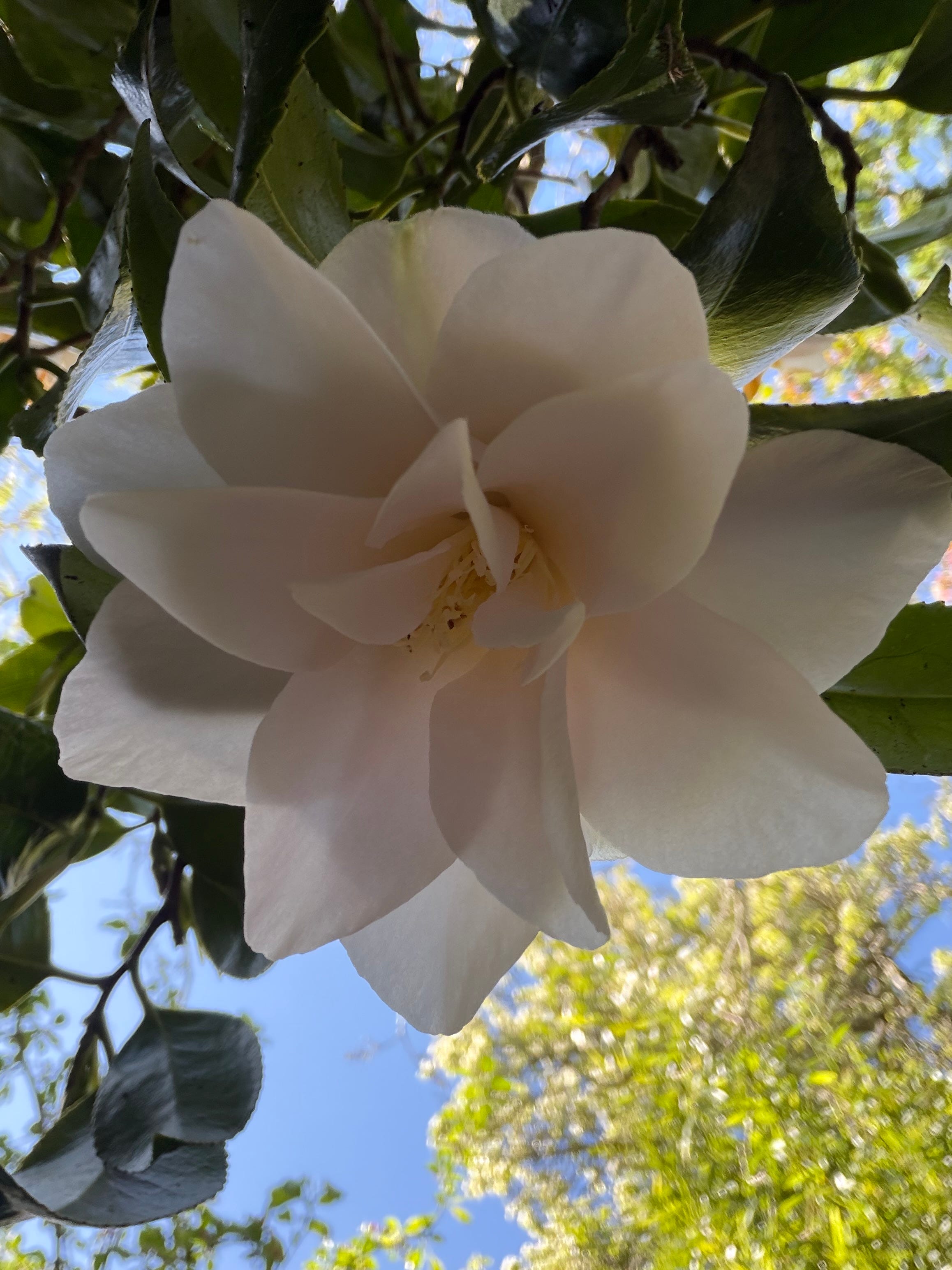
Anyway, enough of generalities. This morning we took my mother-in-law to the park. I kept having to redirect her wheelchair and point it in the right direction, because my wife kept saying, ‘Look! Look at that camelia, with the pale stripes on its red flowers. Look at that white one!’ ‘Beautiful,’ said my mother-in-law. ‘See those buds on the Judas tree (Crown of the Forest it’s called in Hebrew, a far nicer name.) Another week, and it’ll be covered in purple blossom.’ ‘Beautiful,’ said my mother-in-law. ‘Look there at those violets,’ I said, sensing it was my turn.’ ‘Wonderful,’ said my-mother-in-law. In case you form the impression that some kind of memory loss has reduced her vocabulary to this small range of generous adjectives, you would be totally mistaken. She’s as astute and attentive as ever, apt to pick up other people’s entire life-stories in a tenth of the time it would take most of us, and as interested in life, and every small detail of what her children, grandchildren and great-grandchildren do, as ever.

I mention all this not only because I deeply admire my mother-in-law’s capacity always to see the good. (When she and my father-in-law had a serious car accident on the way from the airport up to Jerusalem and her visit to Israel was reduced to a month in the Hadassah Hospital, she observed that she had been enabled to see sides of the country which few others had.)

I reference this also because last Shabbat we read the Song of Songs. That most wonderful of love poems is about noticing, the lily among the thorns, the deer hiding behind the latticework, the half open blossom on the nut trees, the tiny embryo figs on the branch. The world, through the eyes of young love, is beautiful, gorgeous, entrancing. And why should we forget that, even when we grow old?

Last week I was on a panel at the amazing ChangeNOW climate and nature conference in Paris. There were three of us faith leaders, together with Karenna Gore and Satish Kumar. Satish made the whole crowd rise and sing with him ‘The world is beautiful. There is beauty around me, beauty above me, beauty behind me…’ I admit to reflecting that this simply isn’t true. Just think of the wars, the bombs, the killings, the vast devastation. But then, if we remember that the world truly is in essence beautiful, we may take more deeply to heart what it means to destroy life, the wounds we cause, the ruin we leave in our wake, and vow even more earnestly to do our utmost never to let this happen again.

So I try to take a leaf out of my mother-in-law’s book, or rather I should say, garden. I try to notice and appreciate more. I admit that when I set off down the road in the morning, I say hello to the animals. ‘Morning, blackbird.’ ‘How are you doing, magpie?’ I start my day by filling their feeders; I would hate to know that they could find no breakfast after singing their salutations to the dawn. If other people think that I’ve lost it, so what? Most of them won’t hear anyway; they’ve got devices plugged into their ears. I say a quiet ‘good morning’ to the people I pass too. Most of them look straight ahead, unheeding. Others probably think I’m weird; this isn’t how Londoners behave.

But why shouldn’t I be grateful for the birds, or for God, or the spirit, or life, or whatever, that has made us, humans, crows, foxes, dogs, goldfinches, companions? If I notice the birds with appreciation, maybe they’ll notice me with something other than visceral fear. Maybe they, in their own way, are saying ‘Thank you; good to be together on this earth.’

‘Look over there at those grape hyacinths,’ says my wife. ‘I love those ones with the darker blue below.’ I turn the wheelchair to face the right direction. ‘Wonderful,’ says my mother-in-law.

Where is God in these wars?

‘Where is God in these cruel times?’ I don’t need others to ask me; I ask the question myself, frequently. I don’t forget that time in Kyiv in the winter of 2024, a mere year into that ever more bitter war, when a senior priest in the Greek Orthodox Church asked a group of us of different faiths: ‘Where do you think God is in this conflict?’ It was not a rhetorical question, and he himself did not answer.

I think God is where the suffering is. I think God is in the phone calls and WhatsApps to those we love, whether those calls are made in Hebrew, Ukrainian, Farsi, Russian, Arabic, English, or any other language. I think God is in the prayers spoken in existential fear, ‘God protect us! God, be “our shade on our right hand” – and on our left.’ God, we want to live, just live, with some freedom, some hope, and with the people we love.’ I think God is where this love is: ‘How can we care for, protect one another? How can we bandage the wounds of body and soul?’

On Tuesday, I caught Radio 4’s PM programme. They shared from the diary of a young woman in Tehran. On the day the Ayatollah was killed she wrote: I’d waited for this day for years. Now I’m numb. I didn’t want him to be a martyr. We wanted him to face ‘the blood he had squeezed into a bottle for years.’ She reminded me of my grandfather, furious that Hitler took his own life: ‘He should have been forced to face what he did.’ Days later, she wrote: Life is distilled into checking the members of our group. If the bomb is near, the windows shake, there’s smoke. With trembling hands and many typos, they post: ‘It was close. We’re safe.’ That’s all.

Like everyone I know, I contact friends and family in Israel. How are you managing, these frightening times? ‘Pretty much carrying on some sort of daily routine. Disrupted sleep. Exhausted. Families with young kids and elderly people have it worse.’ I write, too, to a colleague in Dubai.

It may seem stupid to some, but I can’t help also thinking of the animals, the ruination of nature. I recall an interview with a photographer which Svetlana Alexievich recorded in Chernobyl Prayer. He tells her: ‘I showed my work to some children… They asked all sorts of questions, but one in particular remains engraved in my memory. ‘Why couldn’t you help the animals that were left behind?’ And I couldn’t answer him.’ (p. 126)

One thinks of people who don’t have strong rooms, safe rooms, or shelters. And of the woman driving in Ukraine who said she could see on her smart phone the soldiers aiming the drone at her car.

It’s horrible, and who knows what the outcome of all this will be, who will be safe, and who will get the blame.

We pray to God: ‘God, you promised “I shall be with you in trouble.” “God will protect you, keep your life safe from all evil.” (Psalm 91; 121)

But I don’t think it’s enough just to pray to God; we have to pray with God as well. We need to find and cherish the presence of God in each other, and in ourselves. We have to be on the side of life alongside God who “loves life and lovingly sustains life.” We need to be on the side of hope together with God, on the side of justice together with God, on the side of compassion and healing together with God.

I believe in the God who is hurting in everyone’s hurts.

Make Me a Sanctuary

I’m here in Berlin, leading a week of intensive study for rabbinical students on the subject of our environment, God’s world. But how, in this city, could I not be thinking about my grandparents and what they endured?

My mother’s father studied here for the rabbinate at the liberal Hochschule fuer die Wissenschaft des Judentums, graduating in 1909. My father’s grandfather Jacob Freimann studied some decades earlier at the orthodox Hildesheimer Seminar. Both colleges stood on the same street, the Artilleriestrasse. Apparently, they were known respectively as ‘the light artillery’ and ‘the heavy artillery’. The institutions remained separate (though no shots were fired) until Hitler forced them to combine, before closing them both down and sending to his concentration and death camps all alumni unable to escape his murderous grasp.

My grandfather managed to flee Nazi Germany in April 1939. My great-grandfather died suddenly in 1937 on his way to celebrate his eldest daughter’s twenty-fifth wedding anniversary in Holleschau. There he lies at peace in the town’s Jewish cemetery, mercifully untouched by the horrors that decimated his family, killing half and sending the others into exile.

But these are not the associations uppermost in my mind as I study the Torah I’m preparing to share. Rather, I find myself meditating on the deep resilience of Judaism, persistent survivor of exiles, wars, and the dragnets of numerous tyrannies.

Today’s rabbinical college, named after Abraham Joshua Heschel (who also studied here but hated the place), is situated in the nearby town of Potsdam, the military capital constructed for the Kaisers. As I walk past the stolid stately buildings and the huge grey archway, I see the stone footprints of power. Here the German army’s records were held, including the undisclosed results of the infamous 1916 Judenzaehlung, the census intended to prove that Jews were shirkers, avoiding service in the Kaiser’s front lines. The conclusions were never published because, it is widely presumed, they proved the opposite. The truth will never be known because the archives were destroyed by allied bombing in World War ll.

Throughout those violent decades years my grandparents in their rabbinates were trying to establish something very different, – less tangible, incomparably more fragile, yet ultimately more enduring: a Mikdash, a sacred tabernacle for the presence of God.

The Torah describes this structure in minute detail: acacia wood, curtains of scarlet and purple, clasps of gold and copper. But in truth it has no fixed footprint and occupies no single place. It is created and recreated, as it has been for millennia, wherever people come together to pray to God, care for each other, seek blessing and try to make the world more compassionate and less cruel. Any and every place where this is attempted is truly holy, not because the ground is sanctified but because space has been made for what transcends time and space: humility and service, kindness and blessing, and consciousness of the spirit that flows through all life, instructing us in our heart and soul not to hate, or hurt, or harm.

I look around me and see the huge stone contradiction of this ephemeral structure, this ideal, this idea. Yet which has proved the stronger, which has endured?

I discuss with my fellow students what it means to perceive the world as God’s creation and everything that breathes as precious, and to recognise that in this volatile and violent age we are here to try to protect and honour the holiness of fragile, vulnerable, transient life.

In the week when we read the Ten Commandments in the Torah

In that moment when the words ‘I am your God’ were spoken, the whole world fell silent, all creation stood still and listened. Every living being felt: ‘These words are spoken to me.’ Everything in nature realised: ‘This is my inner essence; this is who I truly am.’

This beautiful explanation, by Rabbi Yehudah Aryeh-Leib Alter of Ger, takes us far beyond the understanding of the first of the Ten Commandments as a statement of religious dogma. Rather, it is the truth at the heart of all life: whoever I am, in whatever way I frame my identity, – Jew, continental, American, Russian, gardener, teacher, parent, teen – there is a deeper reality to me. That truth flows through me and through all things constantly, almost always unrecognised and unnamed, but without it I would have no breath and my heart would not beat. That truth is the sacred vitality, the divine energy, which imparts life to all that is. In that moment when God spoke, not just down from Mount Sinai but upwards from the depths of all being, this truth surged to the fore and, for one inerasable moment, united all consciousness in the one awareness: this is my God, the ‘I’ which is the core of all being and is the deepest reality of all that exists.

That moment of revelation at Sinai may or may not be historical, but it certainly is eternal, universal and all-encompassing. Only, it flows deep down and concealed, well below the loud, unceasing, constantly chafing, frequently brutal, experience of our everyday world. Noise and violence drown it out. But they cannot negate it or render it untrue. We continue to hear it, if only rarely; we to intuit it in those moments when we fall silent and not just our mind but our heart comprehends: we belong to one life you and I, fellow traveller, fellow human, fellow being, bird, sheep, tree.

Yet, despite this teaching, I find myself thinking over and again of a very different commentary on the Ten Commandments, by my much-missed teacher Rabbi Hugo Gryn. In Chasing Shadows he writes of his experience in concentration camps:

‘In the intervening years I have often thought how Auschwitz-Birkenau was the denial and the perversion of all the Ten Commandments. In that Nazi empire…it was clear that:

I. God was replaced by a Fuehrer and his minions who claimed for themselves the power of life and death.

II. They fashioned for themselves idols of silver and gold and filled their world with the sigh of swastikas, the sound of Heil Hitler and the smell of burning corpses.

VI. Murder was at the heart of that culture, and killers were promoted and honoured.’

This is what can happen when we forget the sacred ‘I’ which is the heart of all life and by virtue of which all life is precious and must, in all its individuality and diversity, be recognised and respected. How different that ‘I’ is from the ‘I, not you’; the ‘I have no place for you,’ the ‘ego-nationalism,’ exclusionism and racism at the core of the worst of populist politics. How different from those tyrannical ‘I’s’ in our current world, eager to take up weapons and kill.

I fear this rise of violence and contempt, whoever it is directed against: refugees, fellow Jews, Muslims, non-Brits, nature, life itself. That is why it is so important, essential beyond anything words can convey, to listen to that voice which speaks from Sinai and, as Rabbi Yehaudah Aryeh-Leib taught, to recognise it, be silent, and know.

5786 Shabbat Shirah – The Shabbat of Song

Singing abides deep in the intrinsic nature of existence. It cannot be alienated.

In the dark times, will there also be singing?
Yes, there will be singing.
About the dark times.
~ Bertold Brecht

That is why the authors, whoever they were, who composed Perek Shirah, ‘The Chapter of Song,’ were not satisfied that the ancient Mishnaic texts which reached them should speak only of law and ethics. For beneath even the basic, essential truths that address the will and conscience, they sensed a further depth of consciousness, an awareness of the sacred, and that consciousness sings. Not only, therefore, did they compose their chapter in its honour, but it seems they backdated pseudepigraphically it to that core creative rabbinic period of the first and second centuries of our epoch, as if to say: This is not only equally as valid and as holy, as necessary to the life of the spirit as keeping the Sabbath, or proclaiming ‘God is one’: it is, in fact, the true meaning of ‘God is one,’ the truth that nourishes all subsequent truth, the essence of being itself. Hence, they understood that not an orb, nor a whale in the ocean, nor a bird, nor a human soul in its journey across the span of life, but will, sometimes even unknown to itself, be susceptible to song.

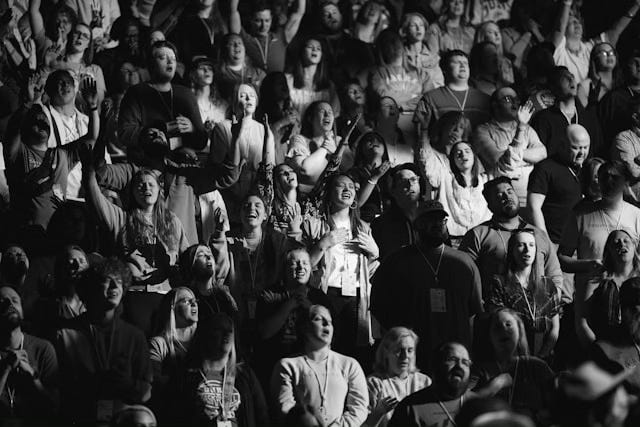
Song may be bleak and painful. The other prisoners, tortured by the Apartheid regime in South Africa’s jails, would sing, whether from horror, fear or solidarity, while their fellow victims of the regime, innocent as they themselves were except for protesting the tyranny of their government, were taken for execution. And today, the priests, rabbis, imams and population of Minnesota and elsewhere who stand against the extra-judicial murders of their townsfolk, sing. Song is indefatigable in its protest.

Large group of people singing

The poets and musicians may themselves be killed; those who hate freedom will continue to seek them out and murder them, but their poetry and songs cannot be put to death:

You took away all the oceans and all the room.
You gave me my shoe-size in earth with bars around it.
Where did it get you? Nowhere.
You left me my lips, and they shape words, even in silence.
~ Osip Mandelstam

And even when those lips can no longer make words, – Stalin had Mandelstam exiled and he died in transit – the words they shaped continued to be learnt by heart, whispered while tyranny reigns, but sung when freedom returns.

For there exists a deeper music to which the human soul, and the spirit of every being, responds. This music belongs to no one, which is why it cannot be locked away. It is the vibrancy, the rhythm and resonance of life itself, of infinity, of God if you will, of the sacred energy as it flows through all creation, through everything that exists. Only the hard heart cannot hear it; that is why the cruel in spirit persecute those who can.

It is this song, taught Rabbi Yehudah Aryeh-Leib of Ger, that the Children of Israel sang when Pharaoh was defeated, not on account of his death, but from the joy of liberty. And in their own song of freedom, they sung the freedom song of all creation. For the Torah says: ‘They sung this song,’ but to what does this refer? he asks, rejecting the obvious answer that it refers to the words which follow in the text. No, he insists, this points to the song that has existed from the moment of creation, the music which is present but concealed in all things, and which although so often unheard, is the invisible essence and source of energy of all that exists. It is the song of the earth ‘from whose corners we hear music;’ of the trees of the forest which clap their hands and dance, and of the wild geese, pulsing forth in honks and powerful wingbeats as they traverse the sky: ‘A voice calls out in desolate places: make straight the pathway through the wilderness for God.’ It is the song which shall be sung in the time to come, when the world is redeemed.

Is this true? One doesn’t hear such music in the headlines about brutality, murder, injustice, contempt and incitement to hatred that fill the virtual realms of social media and the press. There is little if any testament to such music in the reports from witnesses to mass killing, secret murder, torture, sadism, lying, deceit and pretence, a literature so vast and horrible that it’s unbearable to contemplate for long, but which must also be heard and heeded. Song, or sob, which is the deeper reality? The answer must be both, or else we too will join the heartless throng.

But the singing remains, inalienable, even when inaudible. For it derives from a source which flows deeper and sustains life more truly than the selfishness, fear, envy and anger, the failure of compassion and imagination, which shrink the heart.

And were it not for this singing, humanity would have no hope.

The 4 ‘centrics’ at the centre of everything

It sounds like a University Challenge question: ‘Name four words ending in centric.’ Well, these are the four which preoccupy me: theocentric, anthropocentric, biocentric and kincentric (I only learnt the last one recently). This begs explanation. The terms may sound abstract and airy-fairy. But what they mean to me isn’t just close to the heart and soul; it is the heart and soul.

‘Theocentric’ is the appreciation that the flow of sacred energy, the gift of divine life, is the core of everything, forming and reforming all that is, bestowing consciousness on all life, each being according to its particular nature, role and capacity. It is what Judaism’s most basic statement truly means: ‘Our God is one.’ That oneness inhabits everything, and the appeal ‘Shema, Hear,’ calls on us to heed it in all that is.

By anthropocentric I don’t mean that ‘man is master of all things’. I want to free the word, if that’s possible, from its well-worn associations with power and gender, and understand it instead as indicating our connection with and responsibility for our fellow human beings. Years ago I was invited to the Kirchentag of the Protestant Church in Germany. The strapline of the conference was ‘Ich sehe dich; I see you.’ It left me with the question: who don’t I see? Whom do I fail to notice? In tomorrow’s Torah portion Moses, raised in the Egyptian palace, ‘turns aside to see’ the sufferings of slaves. It changes his life. That’s what I mean by ‘anthropocentric’: widening and deepening our circle of compassion.

I’d come across the word ‘biocentric’ before, but I’ve thought about it more deeply since I encountered it in a critical sentence in Rabbi Adam Zagoria-Moffet’s inspiring book: A Spark of Total Darkness:

We have a responsibility to transform our thinking about religion from an anthropocentric obsession to a biocentric reality. (p. 59)

He echoes the wonderful lines by the scientist and poet Rebecca Elson

We astronomers…. Honour our responsibility to awe.

Rabbi Adam deliberately uses ‘anthropocentric’ in the limiting way I critiqued above in order to challenge us to stop caring only, and thinking God cares solely, about humans. All life is sacred. Neither Judaism nor any true spirituality can condone our destruction of other species. All life co-exists together on earth, and no life can exist without this coexistence. We must re-learn our place in the sacred ecology of existence. As the daily prayers say: ‘How great are your works, God; you created everything with wisdom.’

I hadn’t heard of ‘kincentric’ until my friend Dr Justine Huxley gave me her book: Kincentric Leadership: Cocreating with a living intelligent Earth. ‘Kin’ is related etymologically to ‘kind’ not just in its connotation of fellow species but also of ‘kindness’. To live kincentrically means more than acknowledging theoretically our interdependence with all life. It means expanding our consciousness and changing our conduct so that we co-exist in respectful awareness, humble partnership and compassionate connection with all life.

If we thought and lived in accord with these four ‘centrics’ how different everything would be! Justine Huxley quotes a sentence attributed to Sarah Durham Wilson:

The way you alchemize a soulless world into a sacred world is by treating everyone as if they are sacred, until the sacred in them remembers.

I’m trying to start with myself.

Facing my retirement with complex feelings

As I near the end of my time as Senior Rabbi of my Synagogue I feel complex emotions. I am deeply grateful for the wonderful New North London community and the hundreds of people who have enriched my life. I feel loss, bewilderment, and uncertainty about my future. But I don’t doubt my decision to retire, and have every confidence in the congregation’s future, with its caring and committed membership, dedicated lay leadership, devoted professional team and excellent rabbis.

I also have plenty of fight still in me, and will continue to work with energy and love for everything I care about through my continuing role as Senior Rabbi of Masorti Judaism and in the worlds of climate, nature and interfaith.

After more than a thousand contributions to Shalom NNLS, these are some of my last. I am glad my colleagues are taking over these weekly messages and am moved by their thoughtful words. I will continue to write regularly for Masorti Judaism; you can follow me at https://jonathanwittenberg.substack.com/, or you may have had enough. For me, this writing has been a kind of listening to my conscience and heart, a conversation with the many people who inhabit them, whose words and deeds have moved me.

After 38 years full time, and several as youth worker and student rabbi before that, I find myself reflecting back on how I felt all those decades ago. I was hesitant and afraid: Would being a rabbi eat me up? Would I cope? Would I love committees? Underneath it all was the deepest question: did I honestly believe in God?

Reality has answered those questions, but not in ways I’d foreseen. The privilege of rabbinical work has deepened me. People, with their joy, tears, griefs, fears and loneliness, have shown me inner spaces, both in themselves and in me, that I didn’t know were there. Listening has unlocked chambers of the heart I had never before entered. I hold there echoes of countless people’s words, resonances of love, wonder, anguish and sorrow, which I will garner carefully until I die.

As for God, I have found not answers but moments of response. Actually, that’s not true:  they have found me. I haven’t seen the light and had all my doubts resolved. You won’t find me preaching God at Speaker’s Corner.
I dislike dogmatic certainties and have little time for knock-down theological arguments. They frighten me. I have no answer to why there’s so much injustice, cruelty and destructiveness in the world, other than feeling sorrow and grief. But I somehow sense that God is sorrowing too, just as God takes joy in the trees, birds and animals, is present in every form of consciousness and resides in the human heart.

I’ve heard no great voices from heaven, and I’d be locked away if I claimed I had. But I have, just sometimes, overheard the still small voice of wonder and been chastened by awe. Such moments have evoked in me, as they do in others, a feeling of relationship and responsibility. I don’t question them; they question me: Are you there? Do you care? They tell me that I am answerable to something infinitely resilient yet infinitely vulnerable. They put in my heart the knowledge that I must not hurt, must never drive this sacred presence away.

I don’t need any more than this.

As for my question about loving committees, the committee making the decision is still out.

The Spirituality of Creation – a Jewish approach

‘Upon Three Things the World Stands:’

Simon the Just says confidently that the world stands on three things. But how securely does our world actually stand today? Given the climate and nature crisis, can we still take it for granted that, in the words of Ecclesiastes, ‘Generations come and go, but the world stands firm forever’? This essay, added for the second edition, explores the spirituality of creation and asks what we must do to safeguard and restore God’s world. These concerns are even more urgent now, and press far more relentlessly on our consciousness and conscience, than they did just three decades ago.

In The Hebrew Bible

The Hebrew Bible opens with a magnificent hymn to the glory of creation. The world is understood as God’s work, from the first light to the separation of land and ocean, the growth of trees and grasses, and the abundance of life, of fishes, birds and animals which fill the earth. Human beings are not created on a separate day from the other mammals, but as part of the continuity of becoming, pointing to the kinship and interdependence of all living beings. The account is not an empirical description and should not be discredited as failing to be scientific. In the words of the great twentieth century rabbi and mystic, Abraham Isaac Kook,

‘Everyone knows that the creation is one of the mysteries of the Torah, and if all the statements are merely to be taken literally, what mystery is there?’

However, he notes nevertheless that:

‘The theory of evolution… is more in harmony with the mysteries of Kabbalah than all other philosophical theories.’ 1

Rather, what the opening chapter of the Bible communicates, briefly, simply and with great beauty, is that the world is God’s work and everything in it deserves and demands our respect. As the Jewish mystics saw it, the Torah begins with the all-important teaching that the earth is created and sustained by the sacred divine energy that flows unceasingly through all life. That may be why so many, who struggle with the idea of an interventionist God who rules over history and determines our destinies, feel moved in the natural world by a deep sense of awe and wonder.

The flow of Jewish life, the daily liturgy, the weekly recurrence of the Sabbath and the rhythm of the Jewish year all constantly remind us of the preciousness of creation. The morning prayers emphasise how God ‘made all things in wisdom.’ The weekly Sabbath recalls the completion of this work, and, with its commandment to refrain from all labour, ensures that the day is set aside for the appreciation and honouring of God’s world. On shabbat we are reminded that ‘the earth is the Lord’s.’ (Psalm 24:1) Just as on the Sabbath work on the construction of the holy tabernacle in the wilderness had to cease, so must we refrain from labour on Shabbat in order to remind ourselves that the whole world is God’s temple. 

The Hebrew Bible repeatedly shows a close awareness of the natural world. Its authors intimately knew the bird and plant life around them, the trees, the domestic and wild animals, and even the insects, from the ants to the threat of locusts. They understood all too well the devastating impact of droughts and the blessings of sufficient rain in its due season. They saw the weather as the divine instrument of reward and punishment for human conduct, as stated in Deuteronomy: ‘If you listen to my commandments… I will give the rain of the land in its due season.’ But if we fail to listen ‘God will close the heavens and there will be no rain.’ (Deuteronomy 11:13, 15) Nowadays we generally regard meteorology and theology as entirely different subjects and are apt to dismiss the notion that our actions might affect the weather. But our entry into the Anthropocene era forces us to reconsider whether the climate might not after all be, at least to some degree, a response to how we behave.

To be a human is to bear responsibility for God’s world. What is required of Adam and Eve in the Garden of Eden is paradigmatic for all times and places. God commands them ‘to work [the earth] and keep it.’ (Genesis 2:15) ‘Working’ in Hebrew carries the connotation of reverence, even worship; ‘keeping’ indicates honouring and obeying God’s laws.2 We are thus called upon to show deep respect and care for the home we share with all life. The instruction to Noah to take two of every species with him into the biome of the ark can be seen as symbolic of the challenge facing our generation to preserve biodiversity and prevent extinctions, as the floods of climate change threaten to engulf us.

Specific commandments in the Torah mandate respect for non-human life. It is forbidden to ignore an animal which has collapsed under its load or which has been lost by its owners. (Deuteronomy 22:1-4) It is not permitted to take a mother bird together with its eggs or fledglings; she must be allowed to go free. (Deuteronomy 22:6-7) The great biblical commentator Nachmanides (1194 – 1270) understands this as injunction against any action which could lead to the collapse of a species. The rabbis summarised the laws concerning animals as a prohibition against all forms of cruelty. They expanded the Bible’s injunction against cutting down fruit-bearing trees even in times of war (Deuteronomy 20:19-20) to include all forms of needless destruction and waste, pithily expressed as the principle of bal tshchit, ‘Do not destroy’. ‘Do not destroy my world,’ the rabbis warned, ‘because [if you do] there is no one who can come after you to repair it.’3 These rules form core principles of Jewish environmentalism today.

Nowhere is it made clearer that the earth belongs to God that in the context of the Sabbatical year, when the land must be left fallow and all produce must be shared with the poor, with refugees and even with the domestic and wild animals. The seventh year is a cyclical reminder that no one has outright ownership over the land, because ‘the earth is Mine,’ says God. (Leviticus 25:23) This is the opposite of the what the prophet Ezekiel sees in Pharaoh, who’s attitude that ‘the Nile is mine and I made it,’ ultimately leads to the destruction of Egypt. (Ezekiel 29:3) Pharaoh can be understood as the prototype of the extractive profiteer who cares nothing for the devastation left in his path. Despite the challenging verse in Genesis commanding humans to ‘conquer the earth and fill it,’ (Genesis 1:28) often pointed to as the source of exploitative anthropocentrism, the Hebrew Bible emphasises over and again God’s sovereignty over creation and our duty to honour it, down to the everyday details of how we treat all our fellow creatures on earth.

But to be human is not just to be held responsible; it is also to be privileged to experience the majesty and wonder of the world. The beauties of the created world give us joy in times of hope and offer us solace in hours of distress. In ‘answering’ Job out of the whirlwind, God does not respond to his challenge to explain the injustices he has suffered or address any of his burning questions. Instead, God confronts him with the glory of nature, from the heavenly constellations to the ocean’s depths, in a pouring forth of magnificent poetry. Though unanswered, Job is satisfied, as perhaps we may be too in times of, albeit less radical, trauma, when the melodies of small streams, the shelter of the trees and the birdsong bring healing to our spirits without any explanations of the whys and wherefores of our suffering.

Mishnah and Talmud

The rabbis of the Mishnaic period, from a generation before the common era to the close of the second century CE, were deeply connected to the land. They debated in detail how domestic animals should be cared for on the Sabbath, since the commandment to rest applied to oxen and donkeys as well as their owners. During the autumn festival of Tabernacles, prior to the prayers heralding the winter rains, they pleaded, in a moving litany recited to this day, for ‘man and beast, the renewal of the earth, the planting of trees in desolate lands; for powerful rains to bring healing and life to forsaken places.’ 4 They knew all too well the impact of droughts, locusts and pests, establishing an entire order of fast days to plead with God to intercede and protect us from them.5 They saw the blessings and curses of good or bad harvests as heaven’s reward or punishment: God’s judgment was executed through a good or bad grain crop at Passover and by plenteous or meagre fruits on the trees following Pentecost. The rabbis well understood Ecclesiastes’ warning that ‘Even a king is subject to the soil.’ (Ecclesiastes 5:9)

They established a structure of blessings, including for the most basic actions such getting up in the morning, eating and drinking, and visiting beautiful places or sites resonant with history. When one smells scented flowers, one blesses God ‘who creates fragrant herbs.’ When witnessing lightning, one acknowledges God ‘who fashioned the works of creation.’ When one goes out into the fields in the spring month of Nissan and sees flowering fruit trees, one thanks God ‘for creating good trees for people to enjoy.’ This is God’s world, and we enjoy it not by right, but as a gift, a precious but fleeting privilege.

The Talmud has no time for the culture of entitlement. In a striking passage, it insists that ‘whoever benefits from the things of this world without saying a blessing is to be considered as if they had committed the sin of misappropriation.’6 This is a reference to the biblical transgression of inadvertently using items belonging to the temple for one’s own purposes. (Leviticus 5:14-16) Notably, it’s a sin about lack of recognition. Whereas the Torah specifies only the unintentional misuse of objects belonging to the tabernacle, the Talmud metaphorically extends this prohibition to the whole world, implicitly likening all creation to God’s temple: we are not allowed to derive benefit from it without according its true owner due appreciation. Addressing the question as to what someone should do who has committed this wrong, the Talmud instructs them to ‘Go to a sage and learn the blessings.’ The meaning is not just that we should study the appropriate forms of words, but that we should deepen our consciousness and stop taking the gifts of the world for granted. Indeed, one interpretation of the Hebrew word for blessing, berachah, connects it with bereichah, a pool of waters, suggesting that to recite a blessing is to acknowledge and give thanks for the flow of sacred energy that gives life to creation.

The Talmud understands the ‘Works of Creation’ as a divine mystery, to be studied only among the initiated. In a remarkable passage, it describes how the first century sage Rabban Yochanan ben Zakkai is approached by one of his closest disciples to impart the divine secrets. He sits down beneath an olive tree and covers himself with his garment, because ‘the presence of God is with us, and the ministering angels are accompanying us.’7 The trees around them begin to dance, singing the words from the Psalms, ‘Praise God from the earth,’ and the angels join in. Perhaps we should read the account today as a humbling evocation of what it feels like to be smitten by sacred wonder.

In The Chapter of Song, a tractate attributed to the Mishnaic period but likely to be of later authorship, every part of creation, the elements themselves, the rivers and seas, and many kinds of birds and animals are all understood to have their favourite scriptural verse and their special music. The earth itself declares, ‘From the ends of the land we have heard melodies;’ the trees say, ‘Then shall the trees of the forest make music before God who has come to judge the earth,’ while the birds sing, ‘Even the swallow has its nest for her fledglings.’ A recent translation subtitles the work ‘The Symphony of Creation.’8

An eleventh century prayer for the Day of Atonement by Rabbi Elijah ben Mordechai beautifully catches these hidden melodies of creation, if we are attentive enough to hear them:

On high all is holy, below all is blessed; the waters are mighty, the rivers cry out; the earth is melody, the trees make music; the mountains dance, the hills sing; every ear hears and every mouth gives praise.

If only we perceived the world in this manner, how much less heedless we would be!

Maimonides

Following the Bible’s warning that ‘no one shall see me and live,’ (Exodus 33:20) and the rabbinic understanding that God’s mind is unfathomable to human thought, the great philosopher and legalist Maimonides (1138 – 1204) stresses that, while it is impossible for human beings to comprehend God as God truly is in God’s own self, we do have the privilege of being able to know God’s works. The more deeply we study and respect them, the closer we come to fulfilling the commandments both to love and to fear our God. Such study begins with the endeavour to comprehend the physical world, from where it extends into the domain of metaphysics.

In the Mishneh Torah, his seminal code of Jewish law, Maimonides asks, ‘What is the way to the love and fear of God?’ before answering:

When one contemplates God’s great and wondrous works and creatures, and from them obtains a glimpse of God’s wisdom which is incomparable and infinite, one will straightway love, praise and glorify God, and long with an exceeding longing to know God’s great name… Pondering these matters, one recoils affrighted, realising that one is a small creature, lowly and obscure, endowed with slight and slender intelligence, standing in the presence of God who is perfect in knowledge.9  

Love and fear lead us into a kind of emotional dance: love draws us forward in wonder, fear makes us step back in awe as we behold the majesty of creation.

Though Maimonides stresses the role of the human intellect in apprehending God’s works, he regards all forms of life as significant in their own right:

It should not be believed that all beings exist for the sake of the existence of humankind. On the contrary, all the other beings too have been intended for their own sakes and not for the sake of anything else.10

Focussing on the laws in the Torah concerning the treatment of animals, he explains the prohibition against slaughtering an animal and its mother on the same day in terms of animal sentience:

There is no difference between the anguish humans and animals feel, for a mother’s love and tenderness towards her child is not dependent on the powers of reason, but of the imaginative faculty [that is, the emotions].11

In this way, he precedes Jeremy Bentham by many centuries in appreciating that the key question is not whether animals can reason, but whether they can suffer. In a similar vein, many centuries later, Rabbi Abraham Isaac Kook suggested that behind the seemingly inexplicable commandment not to wear garments made of wool and linen together, there might lie the concern that, whereas no pain is involved in harvesting flax, shearing the wool from a sheep or goat might cause the animal hurt:

Man, in his boundless egocentricity, approaches the poor cow and sheep. From one he seizes its milk, and from the other, its fleece…. There would be no impropriety in taking the wool were the sheep burdened by its load; but we remove the wool when its natural owner needs it. Intellectually, we recognize that this is a form of theft — oppression of the weak at the hands of the strong.12

Creation is thus central to Maimonidean spirituality: we respect God’s commandments by treating all life with compassion; we deepen our understanding of God’s works by studying God’s world, as a stepping stone to higher speculation. The Jewish mystical tradition takes these principles a significant step further.

Kabbalah and Hasidism

The Talmud notes that the words ‘God said’ are repeated ten times in the opening chapter of Genesis, if one includes ‘In the beginning’ as the first of God’s speech acts. The Jewish mystical tradition understands these ‘Ten Utterances’ not as once-off pronouncements but as ongoing speech acts, indicating the unceasing flow of sacred vitality through all creation. The words in the morning service are therefore to be taken literally: ‘God renews every day the works of the beginning.’ The world is unceasingly sustained by the divine speech; were that flow of energy to stop, all life on earth would end. The Zohar, The Book of Splendour, the central text of Jewish mysticism, expresses this through the image of a tree with its roots in heaven and its branches and twigs reaching down to earth:

The world to come cares for this tree all the time, watering it and preparing it through its work, crowning it with crowns, never at any time withholding its streams. Faith depends on this tree…13

At the core of Kabbalah is the understanding that creation is an act of emanation, the descent, rung by rung, of divine energy, which eventually becomes garbed in material form in our physical world of objects and actions. Yet, though concealed, God’s presence remains immanent within all things, flowing through everything and bestowing consciousness on all forms of life according to their nature and capacity:

The essence of divinity is found in every single thing – nothing but it exists. Since it causes every thing to be, no thing can live by anything else. It enlivens them; its existence exists in each existent.14

Thus, creation is not only God’s work, fashioned by God and then left, as it were, to its own devices. Rather, God’s presence remains immanent in all things; God can be found within everything that exists. According to the cosmogonic mythology of Lurianic Kabbalah, sacred sparks of divinity became scattered throughout the earth following a cataclysm in the process of creation. Here they lie, concealed within all things. The task of the human beings is, in the phrase popularised by Hasidism, ‘to raise up the sparks’: that is, to develop our spiritual sensitivity through study, meditation and good deeds, so that we become aware of these sparks and reunite them, through our consciousness, prayer, and good deeds, with the supernal God.

This is remarkably expressed in a passage written in 1942 by Kalonymus Kalman Shapira, known as the Rebbe of the Warsaw Ghetto, whose teachings, buried by their author, were discovered in the ruins of the city after the war and published posthumously:

God is one and God’s Word is one…As that Word cascades down the chain of emanations, it branches into two modes. One mode is the Divine Speech, which summons creation into being. [The other mode is God’s revelation in the Torah, but both modes are ultimately one]. This Speech, imprinted in the natural order, causes the sun to shine by day and the moon by night. So, when an individual makes the ascent, conjoining in unity with the voice of God in the Torah, such an individual hears the sound of the Torah [ie the voice of God] from the world as a whole: from the chirping of the birds, the mooing of the cows, the voices and tumult of human beings… 15

Hence when we listen mindfully to nature, we not only deepen our knowledge of God’s works, but actually hear, and enter into relationship with, that aspect of the voice of God manifest within each tree, bird or animal. For, as the Zohar puts it, ‘There is no place free of God’s presence.’ In an earlier work, Rabbi Kalonymus marvels at our inability to apprehend this divine voice, the flow of sacred energy, in all creation:

Scripture says, ‘You are deaf, hear!’ (Isaiah 42:18). The essential thing is not to be deaf, but to listen. For one who listens to how all created beings above and below testify and declare that God is one and God’s name is one will not separate himself from them; such a person too, together with them, will, in every deed and actions, constitute an affirmation and testament that God is one.16

The awareness of the sanctity of all life, of the oneness of the spirit which flows through all being, and of the kinship which unites us, obliges us to rethink our attitude to everything. There can be no such thing, certainly no such living being, as mere commodity. Nothing deserves our carelessness, let alone our contempt. This is brought home in the chastening anecdote concerning the Hasidic rabbi who reprimanded his son for mindlessly tearing leaves off a tree and crushing them in his fingers:

“How do you know that your ‘I’ is more precious to God than the ‘I’ of that tree?” he asked him. “True, you belong to the domain of the human, and the leaves to the domain of vegetation. But both are filled with God’s holy spirit.”

The story constitutes a radical challenge to the anthropocentric assumption that man is master of all things, and suggests that, important as we humans are, we must see ourselves as only a small, interdependent part of the sacred divine work in which we are not entitled to assume that we have priority of value.

So where are we now?

In a speech delivered in 1993, just days before he died, the moral philosopher Hans Jonas warned that

The latest revelation – from no Mount Sinai, from no Mount of the Sermon, from no Bo (tree of Buddha) – is the outcry of mute things themselves that we must heed by curbing our powers over creation, lest we perish together on a wasteland of what was creation.17

There is a challenging eloquence to this ‘outcry of mute things’: the planet is in fact neither silent nor passive; it’s screaming at us in wildfires and torrential storms. Yet it’s proving tragically, disastrously, possible to remain deaf. We cannot afford such heedless indifference. In the daily prayers we ask God to open our hearts ‘to understand, take note, listen, learn, teach, preserve, carry out and fulfil.’ We urgently need to do exactly that; we must rethink our habits and change our behaviours. But in order to so, we must restore and deepen our spiritual attentiveness. In the words of the contemporary theologian, Arthur Green, we need a faith:

unafraid to proclaim the holiness of the natural world, one that sees creation, including both world and human self, as a reflection of divinity and a source of religious inspiration.’18

David Seidenberg, also a contemporary mystic in the Hasidic tradition, goes further, arguing in his ground-breaking Kabbalah and Ecology that not just humans but all creation bears God’s image. In a telling footnote, he argues that perceiving the world differently will lead to exercising our skills and powers differently too:

When the sacred guides our seeing, science readily becomes a way to open up to the world, rather than to control the world, just as understanding becomes an expression of humility, to “stand under” something, to listen and to wait faithfully upon it.’ 19

Decades earlier, Albert Einstein expressed a similar need to rethink our place in creation, but in plainer, less theological language:

A human being is part of the whole called by us “the universe,” a part limited in time and space. We experience ourselves, our thoughts and feelings, as something separate from the rest – a kind of optical illusion of our consciousness. This delusion is a kind of prison for us… Our task must be to free ourselves from this prison by widening our circle of understanding and compassion to embrace all living creatures and the whole of Nature in its beauty.20

Deepening our consciousness has to go hand in hand with changing our conduct. The rabbis of the Talmud admired those who engaged in study in order to become learned. But they reserved their deepest praise for those who followed their learning through into action. Once we become more attentive to creation, the practical commandments to eschew destructiveness and cruelty and instead to respect, revere, restore and protect God’s world become intuitive, urgent, almost involuntary responses, commanding both our heart and our hands.

We cannot continue the same as before; there is no way to escape our custodial responsibilities for creation. The challenges are immense. But we must not allow ourselves to be intimidated, to succumb to feelings of powerlessness at the scale of the task. The words of the second century Rabbi Tarphon remain as apt as ever: ‘It is not your duty to complete the work, but neither are you at liberty to desist from it.’ (Chapters of Ethics, 2:16) Judaism believes in Teshuvah, the possibility of rethinking and returning, and affirms the possibility of Tikkun, the capacity to repair and restore.

In his beautiful book Is A River Alive? Robert MacfarlanecitesE O Wilson, a pioneer of contemporary ecology. Wilson refers to the current era not as ‘The Anthropocene’ but as ‘The Eremocene’, from the Greek eremos meaning ‘an isolated place’:

‘The loneliness Wilson had in mind … is the silence of a mute planet on which the speech, song and stories of other beings have become inaudible because extinguished.’21 

This contrasts sharply with an ancient rabbinic insight:

All of the trees, plants and spirits that dwell in nature would converse with one another. The spirit that lives in the trees and nature would speak with humankind, for all of the beings in nature were created for mutual companionship with people.22

It is to this understanding of creation as profoundly interdependent that Jewish spirituality calls us to return. Entrusted into our care despite all our failings, it is up to us to protect and preserve God’s world, with reverence and respect.

  1. Abraham Isaac HaCohen Kook, cited in Feliks, Yehuda: Nature & Man in the Bible: Chapters in Biblical Ecology. The Soncino Press. 1981, p. 2, p. 6)
  2. Davis, Ellen F: Scripture, Culture and Agriculture: An Agrarian Reading of the Bible. Cambridge University Press, 2009, p. 29-30
  3. Kohelet Rabbah 7:13
  4. The Daily Prayer Book of the United Hebrew Congregations of the Commonwealth, 4th edition, 2006, p. 717
  5. Mishnah Ta’anit, ch. 1-3
  6. Talmud Berachot 35a
  7. Talmud Hagigah 14b
  8. Perek Shirah: The Symphony of Creation, with commentary by Rabbi Daniel Worenklein, Feldheim Publishers, 2012
  9. Maimonides: Laws of the Foundations of Torah, 2:2
  10. Maimonides, Guide for the Perplexed, Part III, Ch.13
  11. Maimonides: Guide for the Perplexed, Part III, Ch. 48
  12. Otzarot HaRe’iyah vol. II, p. 97; https://www.ravkooktorah.org/KEDOSHIM58.htm
  13. Zohar III 239a-b
  14. Moses Cordovero, Shiur Komah 206b, quoted in Daniel Matt: The Essential Kabbalah: The Heart of Jewish Mysticism, Castle Books, 1997, p. 24
  15. Cited in Polen, Nehemia: The Holy Fire: The Teachings of Rabbi Kalonymus Kalman Shapira, the Rebbe of the Warsaw Ghetto. Jason Aronson Inc. 1994, p. 131-2)
  16. Rabbi Kalonymus Kalman Shapira: Derekh Hamelekh. Family Publication.1994, p. 205
  17. Hans Jonas: Mortality and Morality: A Search for the Good after Auschwitz, ed. Lawrence Vogel. Northwestern University Press, 1996. p. 201-2
  18. Cited in Hava Tirosh-Samuelson: Judaism and Ecology. Harvard University Press.  2002, p. 4
  19. David Seidenberg: Kabbalah and Ecology: God’s Image in the More-Than-Human-World. Cambridge University Press, 2015: note 1020, p. 310
  20. Cited in Llewellyn Vaughan-Lee: Spiritual Ecology: The Cry of the Earth. The Golden Sufi Center, 2013, p. 182
  21. Robert Macfarlane: Is A River Alive? Penguin, Random House UK, 2025. p. 92
  22. Genesis Rabbah 13:2

 This essay is published in English with the kind permission of Julia Enxing and Klaus Vellguth, co-editros: Gemeinsam Schöpfung sein. Schöpfungsspiritualitäten in Europa im Dialog (Creation Spiritualities in Europe in Dialogue), Matthias-Grünewald-Verlag, Ostfildern 2025.

Get in touch...