Torah from a Heat Wave

I catch a glimpse of tiny wings. I sit down quietly to watch. The little birds, – blue tits, great tits, a sparrow, – hop from the yew tree onto the floating leaves in the pond. Quickly they dip their heads, fill their beaks, then skip back up to the safety of the branches. Another darts down, then another, glances round, drinks, opens its wings and disappears. The birds are beautiful. I am so glad we have water for them on this scorching day. I keep still and feel:

‘This is how God speaks to us.’

That’s why I love this short teaching by Rebbe Yehudah Aryeh-Leib Alter of Ger, a favourite Hasidic master:

Torah is the vitality which sustains the works of creation.

Blessed be God who speaks and acts:’ this refers to the works of creation, created by the Ten Utterances.

Blessed be God who decrees and preserves:’ this refers to the Ten Commandments by which the world is preserved. (Shavuot in the year 5631/ 1871)
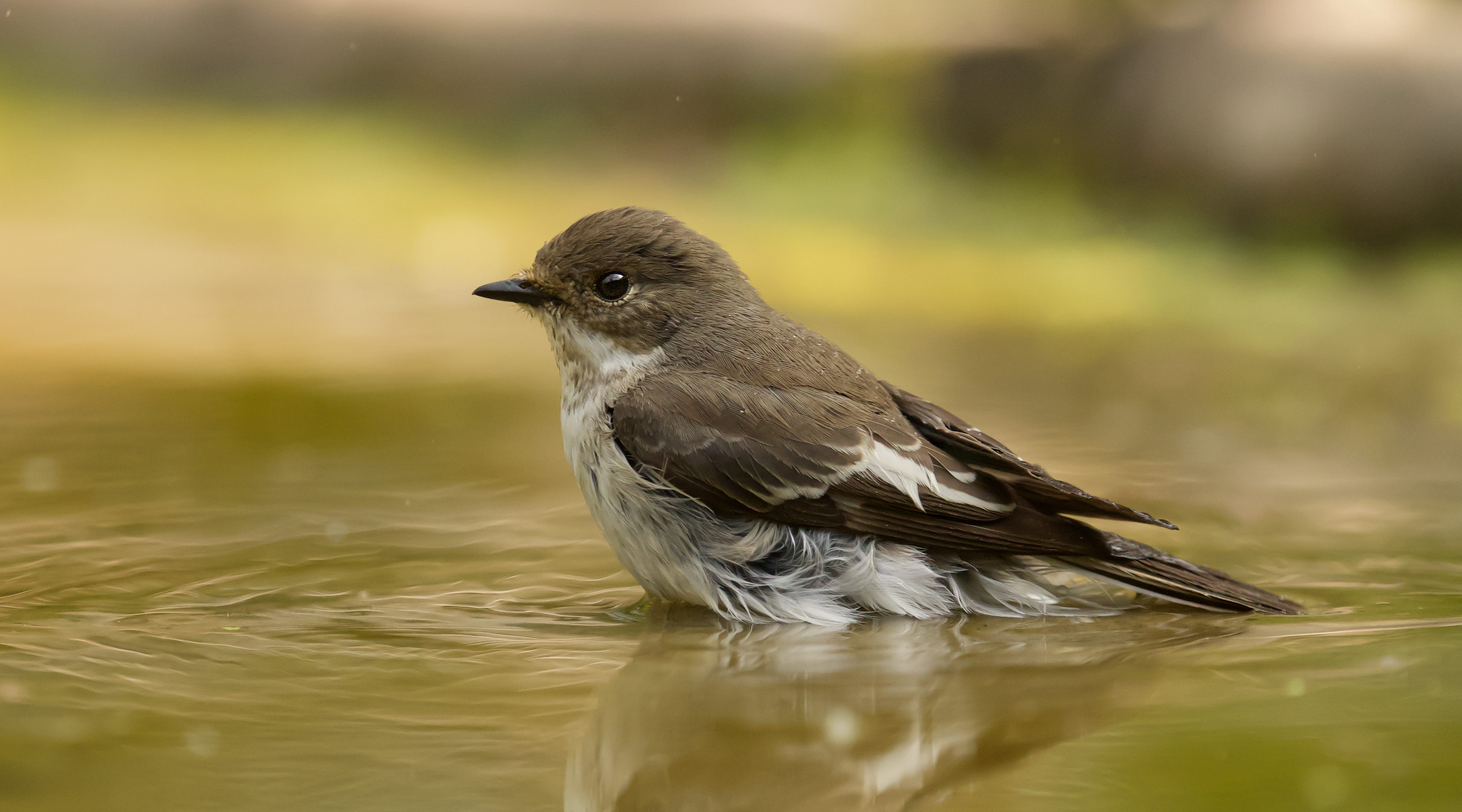
Image by wirestock on Magnific

The words in italics are quotes from the prayer Baruch She’amar, which opens the ‘verses of song’ near the start of the daily morning service. They’re an invitation to listen, and join, the songs and meditations of all the worlds.

The Ten Utterances are the ten times God says, ‘Let there be’ in the hymn to creation with which the Torah opens, commencing with ‘Let there be light’ and concluding with ‘Let us make a human.’ To the mystics these are not one-off commands, but continuous speech acts.

Except ‘speech’ is too literal an expression; God’s ‘speech’ is the unceasing stream of sacred energy that gives life to all that is and imparts consciousness to every living being according to its nature. That ‘speech’ is the hidden essence of everything that exists.

So when we bless God who ‘speaks and does’ we bless the presence of God in the small birds, the water, the trees, our neighbours, ourselves.

The Ten Commandments represent the moral law, the rules, respect and discipline without which creation would be destroyed. A Midrash explains the verse from Psalms ‘The earth was afraid but then became tranquil.’ (76:9) If the earth was afraid, what made it grow calm?

At first, it was terrified that humans would destroy it. But when it heard that people would accept God’s law and live in respectful and harmonious ways, it calmed down. ‘I’ll survive,’ it thought, ‘Creation will be OK.’

But will it?

That’s why my heart tells me that those small birds and that short Hasidic teaching have everything to do with each other, and with what’s going on with our world today.

I love life’s flourishing, the flow of a stream, the wealth of a wildflower meadow, an orchard of old apple trees. ‘Let them be bowed and bent,’ said Matt Biggs in his final Gardener’s Question Time broadcast, answering a enquirer who wanted to straighten up his old fruit trees. ‘Let them have character!’ May Matt’s memory be for a blessing.

Heat and drought, yellow ‘zero’ summers, frighten me. The devastation of war terrifies me because of the sufferings of people, children, old people, soldiers, everyone, – and also because of everything else it kills, the ruined fields, flattened forests, poisoned waters, dead and homeless animals. Surely this is not what God truly wants. So why and how do we allow these horrors to be? There are a thousand answers, and no good answer, to that question.

Meanwhile, I cherish these moments by the pond, and pray and petition for, and preach and persuade about, and endeavour to practise, the love of creation. That’s why my favourite verse in all the Bible comes from Isaiah:

‘They shall not hurt nor destroy in all my holy mountain, for the earth shall be full of the awareness of God as the waters cover the sea.’ (11:9)

Meanwhile, I find relief in watching the little birds cool their tiny feet in the water, wetting their wings and drinking from our pond. For this is God’s eternal speech.
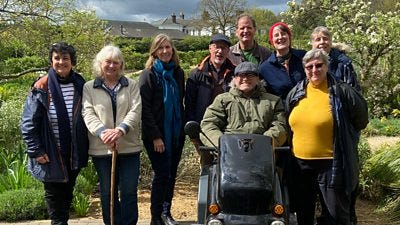
Green Therapy: Matt Bigg’s Wonderful Words on his Last Episode of Gardener’s Question Time.

A group of people in a garden in the sunshine. They all smile to the camera.

I first met Matt Biggs when we hosted Gardener’s Question Time at my synagogue, a highlight of my career and he was on the panel. A deeply religious Christian, he subsequently visited the synagogue for services several times, shared with us the remarkable role Christadelphians had played rescuing Jews from Nazi Europe, went round our garden with us, brought us two special camelias, commented when we showed him the greenhouse kit we’d just bought ‘Putting that up together will test your marriage’ and became a good friend.

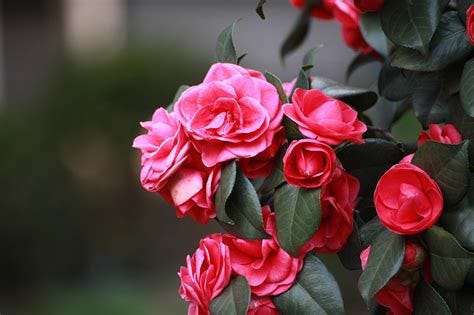
400,000+ Free Camellia Flower & Camellia Images - Pixabay

I was deeply saddened to learn of his diagnosis with cancer. We kept in touch and I was shocked to hear from him recently that he might have only months left to live. ‘Keep me in your prayers,’ said, and I do. So I hadn’t expected him still to be working and was thrilled to hear him when I turned on the radio during a long drive home and caught the latest episode of GQT. I can’t remember a propos what gardener’s question the chair turned to Matt and invited him to speak about his cancer journey. (Matt has been courageously open about his illness from early on.)

What follows is not a transcription of what he said, but of what I took from it, and the impact his words have had on me.

‘You’ve just been given a special honour Matt; tell us about it.’

‘Yes; I’ve been awarded the VMH (I had to look this up afterwards; it stands for the Victoria Medal of Honour ‘awarded to British horticulturists resident in the United Kingdom whom the Royal Horticultural Society Council considers deserving of special honour.’)

‘I’ve been honoured just for doing what I love.’ (He was clearly thrilled!)

‘I did one of those routine screenings for bowel cancer. If they send one to you, do it. Don’t leave it. It’s so important. They called me in and said I had such a tiny bit of cancer it wasn’t a worry. But a year later it had gone to my liver. You can imagine how that went down. But then, an amazing thing. They took away two thirds of my liver, but it regrows. I had a spring pruning.

‘I had chemo. That’s not easy. (I remembered the conversations we’d had about how he sat looking out of the hospital window and thinking how a piece of semi-wasteland could be turned into a garden, how on his next chemo he had begun to design the space in his head, and how after his third he’d taken steps to make it happen.)

‘We all know the power of green therapy. So I thought: restore the garden as a gift for cancer patients. I gathered amazing people – I love them all to bits. They never say no. Why are they making a garden? Because we know how beauty matters, how beauty can heal. So we’re going to wrap that hospital space round with beauty. It’s an antidote to the world of terrors and despair.

‘I say: “Every cloud has a silver lining,” but, if there isn’t one, make it. So I’m trying to get on with everything while I can. I hate the thought of not being able to communicate.

‘I’m just being Matt as long as I can, and I’m loving it.

Halfway through the programme my phone went.

‘Sorry. I can’t talk now. I’ll call you back in ten.’

I just had to listen. I had to capture every word. I had to lay it to my soul. Nothing was going to stop me hearing the rest of that programme.

Back home with my wife, we tuned in to the programme all over again. But I don’t need iPlayer; I can hear Matt’s words in my heart.

God bless you, Matt. God be with you and send you Refuah Shelemah, as much strength and healing as possible.

Listen at: https://www.bbc.co.uk/mediacentre/2026/matthew-biggs-final-gardeners-question-time-bbc-radio-4

The Struggle for the Soul of Judaism

‘Like one single person:’ that is how Rashi explained the Torah’s use of the singular verb to describe the Children of Israel when they pitch camp before Mount Sinai. They were ‘of one heart and mind;’ their differences disappeared as they prepared to hear God’s word.

It’s not like that today. These are difficult times. We are conflicted, and our differences matter. While we do our best to stand together against antisemitism and hatred from without, we also face a struggle for the soul of Judaism from within.

We are not at liberty to be silent in that struggle because it concerns the very essence of our Judaism. The issues could not be greater: what kind of Torah do are we receiving at Sinai? What do we believe God is telling us?

This is how Raoul Wootliff, who grew up in our UK Masorti community but has been living in Israel for many years, answered these questions. He had not long beforehand been beaten up by thugs at a rally in support of Tommy Robinson for protesting against his racist values. On this occasion Raoul was addressing a crowd outside the police station in Modi’in where Alex Sinclair (also brought up in our congregation and also for decades in Israel) was detained for wearing a kippah embroidered with both the Israeli and Palestinian flags. This, said Raoul, is what it meant to be a free Jew in Israel:

The right to think. The right to believe. The right to express who we are – even when it is complex, even when it is uncomfortable…especially when it is uncomfortable.

That, he said, ‘is not the struggle of one kind of Jew – It is the struggle of all of us,’ and it shows not weakness but strength.

Alex himself, discharged unceremoniously from the station with the Palestinian flag cut from his kippah, spoke on Israel’s national media: ‘I am a Zionist, a Jewish educator; I have been for years.’ He is also an observant Jew. The two flags represented his hope for a better future.

I’m proud of Alex and Raoul; I admire their courage and commitment whether or not I share all their views. Immersed in Jewish practice, devoted to Israel, guided by Torah, they are dedicated to the dignity of all persons, Jews and non-Jews, to the rule of just, impartial law, to democracy and to hope. These values are as essential for the Judaism of the Diaspora as they are critical for Israel.

This Shavuot I’m taking their words with me to Sinai.

Sadly, I’m also taking the response of former Mossad chief, Tamir Pardo, who said when he witnessed the lawless anarchy underway in the West Bank: “I feel ashamed to be a Jew.” I’ve seen similar scenes for myself and felt likewise. Others, too, have spoken to me about their feelings of shame. I never thought I would hear such words about our compassionate, just, life-affirming, wise and beautiful Jewish heritage.

We can’t push all this aside as ‘not religion but politics.’ We can’t say, either, that this has nothing to do with us in the UK because it’s only about Israel. It impacts us profoundly. It provides ammunition for the constant media and social media fixation on the ethics of parts of Israeli society and some of its leadership. It’s manipulated and twisted into vicious antisemitic hate speech and murderous attacks aimed evilly at any and all Jews. It divides our communities and hearts, and challenges our loyalties.

Painful and severe as these impacts are, they are not my focus here. My concern is that what’s happening is being done in the name of Judaism and that it profanes our religion and our God.

So what then is the Torah I hope to hear at Sinai? There is, of course, no single answer because ‘the Torah has seventy faces,’ and seventy times seventy voices. But here is what I’m listening for, not just at the foot of the mountain, but always.

I seek to hear God’s voice as Rebbe Yehudah Aryeh-Leib Alter of Ger (1847 -1905) described it, when he wrote that, at the words ‘I am your God,’ all creation grew still. Every living being felt: ‘God is speaking to me,’ because God’s spirit is the sacred essence of all life. For all life bears God’s image and is sustained by God’s spirit.

I seek to hear the commandment ‘Don’t take my name in vain’ in the way Maimonides understood it when he wrote, in the Laws of the Foundations of Torah, that sanctifying God’s name means endeavouring to conduct ourselves with empathy, compassion, fairness and humility before everyone.

I want to understand ‘Don’t steal’ and ‘Don’t covet’ not just as the condemnation of robbery and theft, but also through what they imply about the need to work for societies which care for the needs of everyone, as Isaiah proclaimed: ‘If you see the hungry, feed them; the naked, clothe them; the dejected and homeless, give them shelter.’

These are the words of God from Sinai which I seek to follow and understand. From them, I believe, all the commandments, observances and teachings of our religion can be derived. This is my Judaism, by which, with all my failings, I endeavour to live. I believe it is true to, and in line with, the long, faithful, resilient, tradition of Jewish practice, discourse and commitment.

I believe, too, that we urgently need to teach, live by and stand up for this Judaism. The times are fraught and frightening. All the more, therefore, must we not allow this Judaism to be side-lined, delegitimised and silenced.

I believe, further, that this Judaism offers an essential voice not just within, but beyond, our own Jewish communities, out there in this world of growing uncertainly, fear, and indirection, where other, more dangerous, voices are busy seizing the space.

A Million Acts of Hope

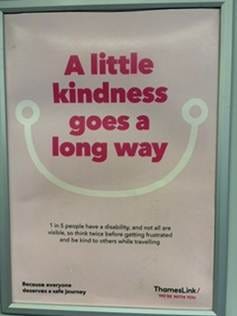
Today is Day 2 of the week of A Million Acts of Hope. It’s timed to say in the face of the rhetoric of hatred and frustration around us, that there is another way: the path of togetherness and kindness, the path of being there for one another. It’s timed to show at a critical hour that hope, kindness and togetherness are the true heart and soul of Britain,

Thanks for reading Heart and Mind! Subscribe for free to receive new posts and support my work.Subscribe

Acts of hope are simple; acts of hope can be tough.

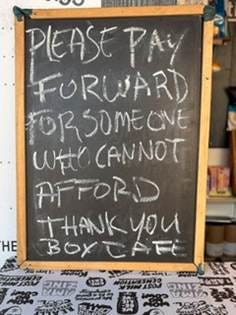
Acts of hope are simple as saying ‘Can I help you?’ as making a cup of tea, as bringing the shopping to a friend who’s not well, giving a lift to the man whose wife is in hospital, as picking up litter, as helping in a foodbank. These are examples which stick with me. There’s a coffee stall by a tube station I pass every week, with a box and a small sign: please help pay ahead for people who can’t afford a hot drink.

IMG_3484.jpeg

At the other end of Britain, there’s a row of birdfeeders up a mountain. I met the woman who looks after them and learnt that she travels two hours each way to keep them full and pays for it all herself. Sir David Attenborough, – congratulations, mazal tov, on his hundredth birthday, – would be proud of her.

Acts of hope are as simple as the dinner we shared as Jews, Christians and Muslims together on the eve when the week began. They are as simple as ensuring that those who need it get a seat on a busy tube.

All this is no more than what the Mishnah states: ‘Gemilut Hasadim, acts of kindness, are of immeasurable value.’ We say those words every morning, because we need to live them every day.

Acts of hope can be hard. It’s takes courage to be out there for each other when fears isolate us and angers pull us apart. I respect those across our Jewish communities who stand up and protect us, who support our most vulnerable. I just heard from the The Association of Jewish Refugees how traumatised some of those they care for are by the resurgent antisemitism around us. I’ve listened to what Jewish, and some non-Jewish, students face for so much as mentioning Israel, or just for being Jewish. I respect and appreciate the Christian and Muslim leaders who’ve spoken out publicly against Jew hatred, standing with us at rallies, praying with us in our synagogues.

Acts of hope can be tough. I admire my fellow Jews, young leaders among them, who show clearly that standing against hatred directed at us means standing against hatred targeted at others, Muslims, minorities, everyone made vulnerable by hate speech around us. Hate travels. Hate for one group leads to hate for others. That is why we must stand up for each other. We cannot condone by our silence the rhetoric of contempt against refugees. We must not spread over it the mantle of acceptability. That’s not only because we were refugees once. It’s because of what Hillel said two thousand years ago: ‘If I am not for myself, who am I? But if I am only for myself, what am I?’ We’ve cited often enough Pastor Niemoller’s famous words: ‘When they came for the communists, I did nothing, because I wasn’t a communist… When they came for me… We know the conclusion.

There’s something harder still about true acts of hope. This is summed up by the epigram in the Dhammapada: ‘Hate is not conquered by hate. Hate is conquered by love. This is a law eternal.’ (1:5) In Jewish terms, it’s the truth that sinat hinam, pointless hate, must ultimately be overcome by ahavat chinam, loving kindness that seeks no reward.

The challenge this takes us to is how can we avoid hating the haters and, in so doing, allowing hate to become part of ourselves. It’s hard to find a good answer. But perhaps what this means is that we have to try to understand where the anger and frustration come from that lead to hatred and contempt. This may prove futile; it may help with nothing. But it asks us at least to try to cross divisions, to hear stories we find it hard to hear. If we ask ourselves: ‘Where is the hope in that?’ the answer might be that, maybe, just maybe, just sometimes, in listening we will learn of the fears and hurts in others and uncover a commonality deeper than everything that divides us. This is exemplified by the Families Forum, the community of Israeli and Palestinian parents who’ve lost children and relatives in the violence, yet who have found each other despite everything, and in so doing have also discovered comradeship, solace and even brotherly and sisterly love.

In these troubled times, I imagine God asking me a question. Perhaps it’s not imagination but the truth. It’s the oldest of God’s questions, the one God asked Adam and Eve in the Garden of Eden: ‘Where are you? Where’ve you been?’ I hear that question like this: Why aren’t you there when people are struggling? Why aren’t you standing alongside people who’re afraid? Why aren’t you listening? Why don’t you care more deeply for nature, for all the community of the more-than-only-human world? From what are you hiding, when there is so much to strive for in this wounded world?

IMG_3515.jpeg

The answer does not lie in trying to do a million acts of hope. It rests in doing just one, or five, or ten, of those acts of kindness, solidarity, care and commitment that bind us to our family, community, neighbours, and, beyond them to everyone who truly cares, of all faiths and none, across the great community of life. It means committing ourselves to such acts not as a once-off in a special week but regularly, because they form the core of who we are. In so doing, we become part of a society committed not just to one single million acts of hope, but to millions and millions of acts of hope, so much so that such acts define who we are as human beings, as a country, as people of faith before the God of all life.

Rabbi Jonathan Wittenberg

*A Million Acts of Hope https://millionactsofhope.org/

is supported by Hope not Hate, https://hopenothate.org.uk

who create ‘a platform for ordinary people to do the extraordinary,’ and by The Good Faith Partnership

https://goodfaith.org.uk

who ‘connect businesses, governments, charities, philanthropists, foundations and communities… around a common vision: the power of people working together to bring about lasting change.’

You can go to

https://millionactsofhope.org

to thank the helpers and doers and be inspired by what they’re achieving.

And you can sign the card which reads:

‘You are the beating hearts of our villages, towns and cities. And because hate can seem louder than hope these days, we have never needed you more.’

Signed, The hopefuls

From where does your strength come?

The Shabbat before the rally against antisemitism:

https://bod.org.uk/bod-news/stand-with-britains-jewish-community-to-oppose-antisemitism-this-sunday-in-central-london/

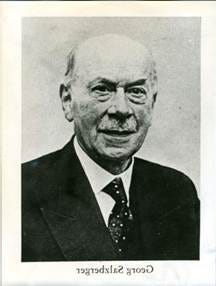
I hear my grandfather say those words Mei’ayyin kochacha gadol – From where does your strength come?’ Someone surreptitiously recorded him when he preached on this theme in Berlin in his late eighties. In the Bible the question is a trick: it’s what Delilah, urged by her Philistine family, asks Sampson in order to find out the secret of his power and betray him.

But for my grandfather, Rabbi Georg Salzberger, the words transcended their context: they were the question that framed his life from his years under Nazism in the Frankfurt of the 1930’s, through his flight to England until the end of his days as a refugee, ‘a brand plucked from the fire.’

From where does your strength come? -That question is painfully and acutely relevant today when antisemitism is resurgent once again, from the far right, the far left and militant Islamist groups. Though we Jews are now in the front line, race-hate against Muslims, anti-refugee rhetoric and hate speech have spread angrily across society, inciting bigotry, division and violence, and spreading fear and distrust. It is sad to be writing these words on VE Day, dedicated to marking the defeat of Nazism, fascism and the end to a terrible war.

Where, then, does our strength lie?

It rests in community, our care for each other, our solidarity despite our differences, our concern for each other’s wellbeing. It lies in the awareness, care and compassion we show to one another throughout our life’s journeys. Judaism teaches us always to be part of community.

This leads to a deeper, prior question: what makes our community strong? The answer, throughout Jewish history, whether in times of persecution or peace, lies in Torah. The teachings of Torah give us the rhythm of our week around shabbat, our year around the festivals, and our life from birth to death. They instil in us the overriding values of justice and compassion, breaking them down into specific acts, mitzvot, from how to bake bread to how to share it with those who need. The details of these mitzvot have been filtered through generations of debate and sensitivity in an unfinished process in which we are called to engage. (I have tried to summarise this in the accompanying very short video to be added shortly)

Thus, community and Torah are the roots of Jewish resilience, faithfulness, and, in times of oppression, steadfast defiance.

But what underlies Torah? This was the question debated by Rabbi Akiva and his student companion ben Azzai two thousand years ago: Love your neighbour, said the former. All humans are made in God’s image, said the latter. Taken together, their responses mean respecting the presence of God in every human being and treating all persons, whoever they are, with justice and compassion. I trust this is what will be expressed in next week’s A Million Acts of Hope (https://millionactsofhope.org/)

Deeper even than this, is the consciousness of the divine within all the world, not just in humanity but in all life, commanding our respect for the whole of nature. The experience of wonder at creation, defined by Maimonides as the love and awe of God, has the power to inspire us and restore our spirit when we feel frustrated, hopeless and washed out. Music, poetry, beauty and the companionship of non-human as well as human life are therefore also essential resources for our resilience and inner strength.

So from where does our strength come? It comes from solidarity, solidarity as Jews with our own people, solidarity with all people of good faith from all faiths, solidarity with all life, solidarity with God’s presence within all creation. These are the secrets of our strength.

As a p.s., I shall be deeply upset and dismayed if Nigel Farage speaks at the rally.

International Dawn Chorus day

Bringing Joy to the Heart and Soul

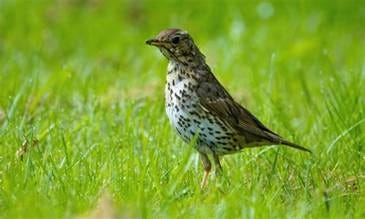
Song Thrush Throstle Bird - Free photo on Pixabay - Pixabay

Yesterday, May 3rd, was International Dawn Chorus Day. It may be too late to do as the Royal Society for the Protection of Birds advises and set our alarm 30 minutes (or an hour-and-a-half) earlier than usual and be up as the lark starts to sing. But tomorrow, or the day after, we still won’t heave missed it.

Or, though it’s not the same as being out there ourselves, we can enjoy the recordings on the RSPB website or with The Wildlife Trusts. I’ve been to the exact place where the RSPB made its You Tube, on ‘the bonny, bonny banks of Loch Lomond.’ I listened to the geese coming in to land and it was wonderful. I said my morning prayers there with the trees as my minyan and the birds as my leaders.

Wildlife Watching Around Loch Lomond: Your Complete Guide from Finnich ...

For once, at least, we can listen to something deeper, older and a million times more beautiful than the noise of all the angry, hate-filled words and murderous missiles of this crazy human world at war. For once, we can hear the whole world sing, and remember, and lay it to our hearts, that this is what we, and all creatures, truly live for.

Here is the Zohar on the subject of dawn, though the focus is less on the music of the birds, than of the spirit. But isn’t it, in the end, the same song?

Rabbi Elazar and Rabbi Jose were on a journey together, and they arose early to walk by the light of the dawn. Rabbi Elazar said: ‘The time has now come for the morning stars to praise their Master and sing to Him. This is the meaning of “When the morning stars sang together and all the children of God shouted for joy,” (Job 38:7) for they all praise God together.’

Pre-dawn, says the Zohar elsewhere, is the hour of healing, when the archangel Raphael (whose name means “God heals”) is abroad in the world. I imagine the birds as his companions, singing to bring healing to a wounded world, singing to bring hope and joy to the over-tense mind and help us unfold the wings of our stymied souls.

And all we have to do is listen.

The dawn chorus is the symphony of song performed by birds looking for love, and to defend their patch. In spring, as the days lengthen, wildlife starts to think about the need to breed. For many male birds, this means belting out the well-worn but wonderful classics to try and attract females. Some species sing throughout the day, but it’s at dawn, as the morning light begins to break, that many different birds join together to perform. https://www.rspb.org.uk/whats-happening/news/the-dawn-chorus-all-you-need-to-know-about-natures-big-show

After the Stabbings

I had so wanted to write something different!

‘Not on the outside door; on the inside entrance,’ pleads a friend who lives far from other Jewish people. We’re discussing where to place the mezuzah, the small parchment scroll with the instruction ‘You shall Love your God’ which marks the doorposts of Jewish homes.

Photo by Sebastian Pena Lambarri on Unsplash

Many Jews feel acutely vulnerable and unsafe. The stabbings of two Jewish men in Golders Green follows the fire-bombing of three ambulances just down the road, and the attempted arson against two London synagogues and a Jewish charity. It’s only months since the murders in the Heaton Park Synagogue in Manchester during prayers on the holiest day of the Jewish year. It’s not surprising that the community feels anxious about attending communal events. Parents hold their children’s hands more tightly when taking them to synagogues and Jewish schools. Some are afraid of sending them.

‘We’re terrified,’ a student tells me: ‘One in five other students refuse to share a house with us because we’re Jewish.’ Students are attacked verbally and sometimes threatened physically. Virulent anti-Jewish hate speech has become commonplace not just on social media, but in many workplaces, and on the street. Antisemitism has become normalised, a colleague says. If the issue is, ‘Is it out of control in the UK?’ the answer is ‘Yes.’

The question: ‘Will there be further attacks?’ seems not about ‘if’ but ‘when’. The phrase ‘Shocked but not surprised’ has become standard when we’re asked how we feel after yet another outrage. As one colleague put it, if you call during marches for the globalisation of the Intifada, you can’t be surprised when it comes to London. Aspects of those marches have rightly led to them being under review. Hate speech leads to hate acts, creating the climate in which they become not just inevitable, but to some even acceptable, perhaps desirable.

The discourse about Israel has sharpened everything. Clear criticisms of specific policies of its government are legitimate and shared by many Jews, including myself. But the persistent demonisation of the country is not. Such constant and vehement attacks have not been directed at any other country. Nor is it in any way right to use Israel as a pretext to go after the Jewish community of the UK, or anywhere else. Such behaviour is simply antisemitism under another guise.

The attacks over the last weeks have justly been described by the government as acts of terror which threaten the national security of Britain. Jewish leaders have long called on the government to ban the IRGC. Evidence may point to other cells of hostile states. The threat level against this country has been raised to ‘severe.’

But the perils for the UK are broader. The main targets now are Jews, but hatred is also impacting Muslim communities, refuges and more. As British Jews, we feel for all victims of hate. Hate travels through society, a moral infection, undermining the classic qualities which we like to think of as characterising Britain: mutual respect, tolerance, inclusion and liberty.

That is why the solution to antisemitism does not lie only in better policing, necessary as this sadly currently is. The extra funding announced today for the protection of Jewish communities is welcome.

It’s an urgent issue for all levels of government. Clear guidelines are required on what constitutes hate speech and incitement, and they must be enforced. Intentions without follow-up cause only frustration. Words are inadequate; the community needs to see action from the top and down.

But antisemitism and all forms of hatred are also an essential concern for the whole of society. We must strengthen interfaith and communal relationships. We need to reconsider how we talk to each other when we’re together and, even more importantly, how we talk about each other when we’re not together. Those responsible for community and workspaces, in the fields of education, health, the media, the arts and all civic institutions, need to manage those spaces in ways that allow discourse to be open, yet respectful. None of this can be achieved quickly.

Yet there are immediate signs of a deeper appreciation of the need for togetherness. The women’s walk in Golders Green for those of all faiths and none, held just a day after the stabbings, was a touching indication. It will be important to see the presence of all the organisations who oppose every form of racism standing in solidarity with the Jewish community at the rally planned for May 10.

Meanwhile, though deeply anxious, the Jewish community remains vigilant and strong.

Judaism is a history of resilience and faithfulness. Two thousand years ago, Rabbi Akiva was asked if he would abandon teaching Torah in public because the Romans had made it too dangerous. He answered with a parable. A fox was watching fishes trying to evade the fishermen’s nets. ‘Come out and play with me on dry land,’ he invited them; ‘you’ll be safer up here.’ ‘No,’ said the fishes. ‘Water is our environment. It may be risky in our rivers, but it’ll only be worse if we leave them.’

Torah is the life-sustaining environment for Jews. Far from abandoning it, we remain committed and resilient and hold its teachings even closer in our communities and hearts.

This piece was originally published in The Independent.

Get in touch...