Today is Day 2 of the week of A Million Acts of Hope. It’s timed to say in the face of the rhetoric of hatred and frustration around us, that there is another way: the path of togetherness and kindness, the path of being there for one another. It’s timed to show at a critical hour that hope, kindness and togetherness are the true heart and soul of Britain,
Thanks for reading Heart and Mind! Subscribe for free to receive new posts and support my work.Subscribe
Acts of hope are simple; acts of hope can be tough.
Acts of hope are simple as saying ‘Can I help you?’ as making a cup of tea, as bringing the shopping to a friend who’s not well, giving a lift to the man whose wife is in hospital, as picking up litter, as helping in a foodbank. These are examples which stick with me. There’s a coffee stall by a tube station I pass every week, with a box and a small sign: please help pay ahead for people who can’t afford a hot drink.
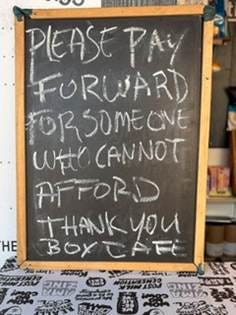
At the other end of Britain, there’s a row of birdfeeders up a mountain. I met the woman who looks after them and learnt that she travels two hours each way to keep them full and pays for it all herself. Sir David Attenborough, – congratulations, mazal tov, on his hundredth birthday, – would be proud of her.
Acts of hope are as simple as the dinner we shared as Jews, Christians and Muslims together on the eve when the week began. They are as simple as ensuring that those who need it get a seat on a busy tube.
All this is no more than what the Mishnah states: ‘Gemilut Hasadim, acts of kindness, are of immeasurable value.’ We say those words every morning, because we need to live them every day.
Acts of hope can be hard. It’s takes courage to be out there for each other when fears isolate us and angers pull us apart. I respect those across our Jewish communities who stand up and protect us, who support our most vulnerable. I just heard from the The Association of Jewish Refugees how traumatised some of those they care for are by the resurgent antisemitism around us. I’ve listened to what Jewish, and some non-Jewish, students face for so much as mentioning Israel, or just for being Jewish. I respect and appreciate the Christian and Muslim leaders who’ve spoken out publicly against Jew hatred, standing with us at rallies, praying with us in our synagogues.
Acts of hope can be tough. I admire my fellow Jews, young leaders among them, who show clearly that standing against hatred directed at us means standing against hatred targeted at others, Muslims, minorities, everyone made vulnerable by hate speech around us. Hate travels. Hate for one group leads to hate for others. That is why we must stand up for each other. We cannot condone by our silence the rhetoric of contempt against refugees. We must not spread over it the mantle of acceptability. That’s not only because we were refugees once. It’s because of what Hillel said two thousand years ago: ‘If I am not for myself, who am I? But if I am only for myself, what am I?’ We’ve cited often enough Pastor Niemoller’s famous words: ‘When they came for the communists, I did nothing, because I wasn’t a communist… When they came for me… We know the conclusion.
There’s something harder still about true acts of hope. This is summed up by the epigram in the Dhammapada: ‘Hate is not conquered by hate. Hate is conquered by love. This is a law eternal.’ (1:5) In Jewish terms, it’s the truth that sinat hinam, pointless hate, must ultimately be overcome by ahavat chinam, loving kindness that seeks no reward.
The challenge this takes us to is how can we avoid hating the haters and, in so doing, allowing hate to become part of ourselves. It’s hard to find a good answer. But perhaps what this means is that we have to try to understand where the anger and frustration come from that lead to hatred and contempt. This may prove futile; it may help with nothing. But it asks us at least to try to cross divisions, to hear stories we find it hard to hear. If we ask ourselves: ‘Where is the hope in that?’ the answer might be that, maybe, just maybe, just sometimes, in listening we will learn of the fears and hurts in others and uncover a commonality deeper than everything that divides us. This is exemplified by the Families Forum, the community of Israeli and Palestinian parents who’ve lost children and relatives in the violence, yet who have found each other despite everything, and in so doing have also discovered comradeship, solace and even brotherly and sisterly love.
In these troubled times, I imagine God asking me a question. Perhaps it’s not imagination but the truth. It’s the oldest of God’s questions, the one God asked Adam and Eve in the Garden of Eden: ‘Where are you? Where’ve you been?’ I hear that question like this: Why aren’t you there when people are struggling? Why aren’t you standing alongside people who’re afraid? Why aren’t you listening? Why don’t you care more deeply for nature, for all the community of the more-than-only-human world? From what are you hiding, when there is so much to strive for in this wounded world?
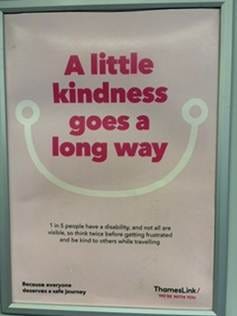
The answer does not lie in trying to do a million acts of hope. It rests in doing just one, or five, or ten, of those acts of kindness, solidarity, care and commitment that bind us to our family, community, neighbours, and, beyond them to everyone who truly cares, of all faiths and none, across the great community of life. It means committing ourselves to such acts not as a once-off in a special week but regularly, because they form the core of who we are. In so doing, we become part of a society committed not just to one single million acts of hope, but to millions and millions of acts of hope, so much so that such acts define who we are as human beings, as a country, as people of faith before the God of all life.
Rabbi Jonathan Wittenberg
*A Million Acts of Hope https://millionactsofhope.org/
is supported by Hope not Hate, https://hopenothate.org.uk
who create ‘a platform for ordinary people to do the extraordinary,’ and by The Good Faith Partnership
who ‘connect businesses, governments, charities, philanthropists, foundations and communities… around a common vision: the power of people working together to bring about lasting change.’
You can go to
to thank the helpers and doers and be inspired by what they’re achieving.
And you can sign the card which reads:
‘You are the beating hearts of our villages, towns and cities. And because hate can seem louder than hope these days, we have never needed you more.’
Signed, The hopefuls