In theses turbulent years, when there is so much uprooting and destruction, Tu Bishevat celebrates planting and growth. Destruction can come in moments; planting takes planning, patience, years and generations. Destructiveness drives God’s spirit into ever deeper hiding, but when we plant, carefully and appropriately, we are partners with God in creation and honour the presence of God which dwells in all living things.
Tu Bishevat began as a tax fixture, a day for determining which fruits were to be tithed in which year. (Mishnah Rosh Hashanah 1:1). But it was the kabbalists in sixteenth century Sefat who made it a date for celebration and prayer, an invocation to God’s presence which, though hidden in this world of concealment, dwells in all life. They composed this beautiful prayer for trees in general, but especially for the etrog, the pride of all that grows and symbol of the Tree of Life, the living Torah:
O God, who brought forth trees and herbs from the earth, according to their stature and variety above, to make known to human beings wisdom and understanding, so that they might comprehend the hidden secrets…. This day is the day your work commences in the renewal of nature and the budding of the trees… (Pri Etz Hadar)
To such mystics, God is both transcendent and immanent, infinitely beyond human comprehension, yet present in the smallest particles of everything that is, and, most especially, within the secret heart of life. God’s creation was not, and is not, a one-time fiat, a once-off ‘let there be’, but a continuous flow of sacred energy, bringing vitality to all existence. That’s why planting, tending, and attending to, the life of grasses, shrubs and trees is not just a physical activity of prime importance, but an act of spiritual engagement. It reminds us that we are part of an organic flow of life, interdependent with all creation.
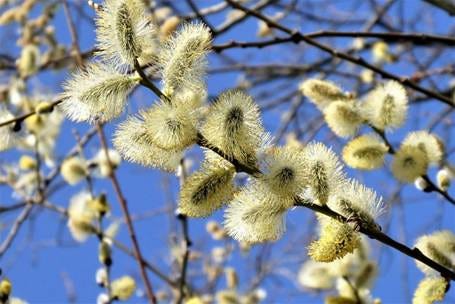
Tu Bishevat therefore reminds us not just of the need to return to a deeper scientific, but also to a humbler and more profound spiritual, understanding of our connection with everything around us, mineral, vegetable, animal and fellow human. It marks our need for a change in our deepest habits of awareness, the move from a utilitarian and exploitative orientation to the world towards a relationship of partnership, respect and appreciation:
We experience ourselves, our thoughts and feelings, as something separate from the rest – a kind of optical illusion of our consciousness. This delusion is a kind of prison for us… Our task must be to free ourselves from this prison by widening our circle of understanding and compassion to embrace all living creatures and the whole of Nature in its beauty. (Albert Einstein)
There are two great spurs to this reorientation. The first is pragmatic, encapsulated in the commandment bal taschit, do not destroy: the urgent need to cease from behaviours which burn, poison, pollute and render the world uninhabitable, initially for other species but ultimately also for ourselves. The Talmud contains the famous parable of the man who drills a hole under his seat in the boat, claiming that, after all, it’s only his place so he can do as he likes, an ancient version of ‘Drill baby, drill.’ As Jews, human beings, creatures of this living earth, we must join the counter-cultures of the innumerable groups across the globe who’re planting, regenerating, rewilding, re-nurturing the earth and tending all creatures from beetles to elephants in defiant commitment in every locality.
The second great motivator is wonder. Maimonides understands this as the true meaning of loving of God:
When one contemplates God’s wondrous and great deeds and creations and appreciates God’s infinite wisdom that surpasses all comparison, one will immediately love, praise, and glorify God, yearning with tremendous desire to know God’s great name, as David said: (Psalm 42:3) “My soul thirsts for God, the living God” (Laws of the Foundations of Torah 2:2)
If that sounds too pious, this beautiful poem ‘I Know Nothing’ by Malka Heifetz Tussman puts it more gently:
I don’t know when [the trees] cry,
I don’t know when they laugh,
I know nothing about such things.
It is a beautiful acknowledgment that trees have their language and moods, and that, largely ignorant before the mystery of their communications, our soul recognises its connection:
And I, –
quiet multiplied by quiet
did not interrupt my quiet prayer…
(Malka Tussman, trans.from the Yiddish by Marcia Falk)
Tu Bishevat, and its partner date Aleph be’Elul, increasingly recognised as the Jewish New Year for Animals, are days to acknowledge this kinship, and determine to live accordingly.