On Monday I attended the Foreign and Commonwealth Office, with Joe Carlebach, representing Masorti Judaism at the Government’s Holocaust Remembrance Day Ceremony, co-hosted by the Embassy of Israel. The theme is Bridging the Generations. It is a deeply affecting ceremony.
After a robust speech, Foreign Secretary Yvette Cooper takes Mala Tribich’s hand and helps her to the platform. Mala, wonderful, eloquent and brave as ever in her mid-nineties, tells how she’s a hidden child before being taken to the Czestochowa ghetto where she’s made responsible for her five-year-old cousin Anna. After years of slave labour she’s sent to Ravensbrueck and finally Bergen-Belsen, where, sick with typhus, she is liberated by the British Army.
The El Malei Rachamim, sung by Jonny Turgel, penetrates deep into the heart.
But remembrance, Yvette Cooper stresses, is not enough. ‘Memory must be combined with resolve,’ the determination to remove antisemitism and all forms of religious and race hatred from across our society. Meg Davis, Young Ambassador for the Holocaust Education Trust, tells of the gross ‘so-called Holocaust jokes’ she faces on social media. Hatred and bigotry must be confronted with education and more education.
Poignant about the past, pertinent about the present, this is a profoundly affecting gathering.
Tonight I’m speaking about my own father’s relatives from my book My Dear Ones: One Family and The Final Solution.
International Holocaust Memorial day cuts deep for all of who live and love our Judaism, and, tragically, for many other peoples as well.
Our first dog Safi used to sing. There were many variants, but two basic melodies, though it would take either a considerable amount of generosity, or a canine ear, to call it that, and what other dogs thought of his music we were never able to ascertain. The first was performed by him whenever we travelled by car and left the motorway to slow down along some country lane. Realising we were close to our destination and that he was about to be set free among the trees and streams, he would, well, there’s not really any other word for it, lift up his voice and sing. It wasn’t exactly harmonious, but it was definitely joyous, and we all enjoyed it. It touched something visceral in us all, a place of freedom, release from the city, liberation from the human equivalent of being kept on the lead. We loved it. Years later, we still say to each other as we drive up to Nicky’s parents’ home among the apple orchards in Kent, or stop by some favourite New Forest glade: ‘Remember how Safi used to sing when we got here.’
If that was his Beethoven, his second kind of melody was, without wishing to insult them, his Rolling Stones. He loved to hang on to those tough long ropes tied from thick boughs in woods or over streams for children to swing on. The moment he caught sight of one he would be off. With a flying leap he would catch on to the rope with his teeth and sway backwards and forwards, his paws waving like a hyper, but not very good, dancer at a pop concert, while something between a yowl and a whine emerged from his mouth so loudly that on several excruciating occasions the unrepeatable sound drew a small crowd to the sight. The only way to get him back was to grasp his collar, prize his teeth apart and keep holding on to him until we were at least a hundred yards away. This was especially embarrassing if the rope hung over water and a group of teenage spectators had gathered to watch.
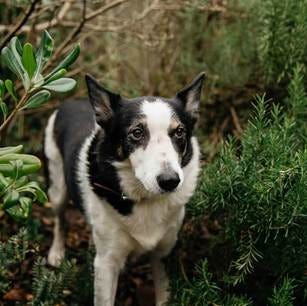
Our other dogs have, thank goodness, been more circumspect. Well, that’s not exactly true. Our second dog, Mitzpah, reputedly a pure-bred Welsh border collie whose relatives sorted sheep in the valleys, would bark at anything, except when someone came to the door or when he himself wanted to come back in from the garden. We loved him dearly, but ‘annoying’ would be too mild a term to describe his choice of when and where to be vocal. He could bark and bark, then bark and bark some more. He had his favourite places, like outside the bathroom or on the stone steps into the garden. We did sometimes wonder, though, if he could see into a dimension we could not and had taken it upon himself to frighten off ghosts hidden behind the walls or stuck for ages in our toilet, the door to which soon bore scratch-markings from his frustration at being unable to enter and chase away whatever spirit he seemed to be convinced abided there. But should a burglar have attempted to enter, we were convinced that Mitzvah would have greeted him with eager-eared silence.
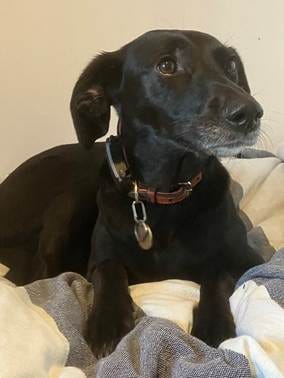
Nessie, our third and current dog, as much loved or, arguably, even more than her predecessors, generally prefers paw language. Her choice of vocabulary is not always subtle. Stop stroking her and you are liable first to be tapped, then scratched and finally all but spanked by her front paw. She has a different tactic at nighttime. If she gets too cold sleeping on our bed, (our determination not to let her do so lasted less than twenty-four hours) she creeps up to you, whether you are awake or asleep, and licks your ear. We don’t need google translate to understand that this meant ‘lift up the covers because I want to crawl into bed next to you.’
However, if we are brazen enough to leave her anywhere even for a few moments, she goes vocal to a degree which makes up for all her previous reticence. If I dare to tie her lead to the post outside the shop, which I do only when we are seriously short of basics, before almost literally running round the store so as not to abandon her for more than sixty seconds, I can be certain that nobody has nabbed her because her yelps and yowls are audible down every aisle. If I’m ever in a dog-friendly café and need the loo, she follows me to outside the door where she whines so pitifully that I can’t help but embarrass myself, and probably everyone else in the establishment, by keeping up a steady ‘I won’t be long; yes I do love you; no I haven’t forgotten you,’ from inside my cubicle where I can’t complete my essential business fast enough.
If each of our three dogs had their preferred mode of self-expression, one means of communication has nevertheless been shared by them all. It has nothing to do with their vocal cords and everything to do with their eyes. It’s how they stare at you while you’re eating. Squatting motionless next to you, except for an occasional hopeful wag of the tail, totally focussed, with a pitiful and pleading look you would be forgiven for thinking they had perfected in the mirror for months, they gaze up at you unflinchingly as if to say: ‘How can you stuff your face like that when I haven’t eaten a morsel for weeks? Plea-ea-ea-se!’ Bad listener as I sometimes am, how can I fail to hearken then?
But all this is only the tip of the tale. This is merely the dog vocabulary we humans can readily understand, the equivalent of ‘bon jour means good morning’ in an old-fashioned guidebook for first-time tourists in Paris. See two dogs together, as when our children and their resident hounds join us, and there is a sophisticated language of interactions which we can only guess at by inter- or misinter- preting their behaviours. The old notion that what distinguishes homo sapiens from all other species is that we alone have language needs to be taken back to its kennel and left there. The actual truth is that there are innumerable languages among countless species; only we just don’t understand. ‘That’s right,’ I mentally hear my dogs assenting, ‘You just don’t understand!’
Can I please add – if you do love animals:
I have been working with two dear colleagues, Rabbi Charles Middleburg and Rabbi David Mitchell, on a prayer book for animal companions. This has been in the making for several years and we are now in a position to publish. We’re are officially launching a pet companion’s prayerbook to support us and our beloved fur-balls through every moment of joy and sorrow. 150+ pages of prayers, readings and meditations for every magical and heartbreaking stage of loving a pet, as well as appreciating the animal world.
We watch and pray with deep concern for Iran, Israel and all the region. As we read in the Torah of how the Children of Israel rise up against slavery, we think of the courageous people across Iran who are risking their lives protesting for freedom and democracy, and we mourn with the families of the thousands who have been brutally killed.
I so didn’t expect it. It happened almost two years ago but I still feel it. I’d half walked, half run, to Whitehall after the Shabbat service to join the mass gathering of all Britain’s organisations that care about nature. Tens of thousands were there, from RSPB members dressed like birds, to Friends of the Earth, and you name it. We were showing the next government, whoever that might be, that people care about nature.
I was anxious, for reasons you’ll understand, about being visibly Jewish in such a crowd. As I stood there, two Imams rushed towards me: ‘My brother,’ they said, embracing me. ‘We care about this together.’
Those hugs kept my heart warm even when, a mile away on the route home, I walked round a small but noisy crowd of ‘From the River to the Sea’ drumbeaters.
I needn’t emphasise here how deeply disturbing and frightening a time this is to be Jewish, though I do want to stress the deep resilience and love of Judaism which, whatever our politics, sustains us and our communities.
I’m aware that many Muslim people have their own feelings of fear: “I guess most Muslims would say that they are perceived as either a security issue, a cohesion issue or an immigration issue.” Those words, from a Muslim leader, come from the 2025 report Questions of Hope Not Hate, launched this week.
It’s a highly important document. ‘We’re not just in an era of change, but in a change of era,’ said its co-author. The report notes the negative impacts of fatigue with democratic institutions, distrust in politics, growing populism, ‘identity-based mobilisation’, and a widespread sense of marginalisation, all of which drive people apart.
Where, then, does the report find hope? In local initiatives, where people meet, talk, share common concerns, drawn together by respected communal leaders, like clergy, mayors: – these groupings remain strong, and are ever more important.
I’m writing from Rose Castle, near Carlisle; it’s a centre for interfaith, reconciliation and conflict resolution. Tonight, Nicky and I are hosting a Shabbat dinner for the second week running, with Torah and prayers, and a table of almost entirely non-Jewish guests, who then share from their own spirituality.
My friend Andy Lester came last week; he’s head of conservation for A Rocha. He told me about his church in Carlisle: ‘This is messy space,’ the minister said on his first visit: ‘If you don’t like that, this isn’t for you.’ But he does like it. ‘It’s the most diverse community I’ve seen outside London,’ he explained: ‘people with African, Asian, East European backgrounds all together, and locals who walk miles to be there. ‘Come this Sunday. There’s the baptism of a man who’s been homeless.’ I missed it, but will go next time and I’m sure my heart will be opened. On the infrequent occasions I attend worship of other religions, I feel taken to the depths of my Judaism and strengthened both in my own faith and in the appreciation that the one God gives breath to us all.
Andy is in no way sentimental: ‘The forces are growing that want to drive us apart. That’s why we must deepen the bonds of togetherness now.’ He’s referring mainly, but not only, to humans: he can identify two-and-a-half thousand kinds of bird.
After the vile murders on Bondi beach, a Christian colleague, a Muslim colleague and I went with a small group of fellow-travellers first to a synagogue where we shared teaching from Islam and Christianity, then to a church where we learnt Torah. These things matter.
We can’t unmake the horrors or disregard the fears. But we can stand together as people who care about God, community, compassion, each other and our kinship with all life.
It sounds like a University Challenge question: ‘Name four words ending in centric.’ Well, these are the four which preoccupy me: theocentric, anthropocentric, biocentric and kincentric (I only learnt the last one recently). This begs explanation. The terms may sound abstract and airy-fairy. But what they mean to me isn’t just close to the heart and soul; it is the heart and soul.
‘Theocentric’ is the appreciation that the flow of sacred energy, the gift of divine life, is the core of everything, forming and reforming all that is, bestowing consciousness on all life, each being according to its particular nature, role and capacity. It is what Judaism’s most basic statement truly means: ‘Our God is one.’ That oneness inhabits everything, and the appeal ‘Shema, Hear,’ calls on us to heed it in all that is.
By anthropocentric I don’t mean that ‘man is master of all things’. I want to free the word, if that’s possible, from its well-worn associations with power and gender, and understand it instead as indicating our connection with and responsibility for our fellow human beings. Years ago I was invited to the Kirchentag of the Protestant Church in Germany. The strapline of the conference was ‘Ich sehe dich; I see you.’ It left me with the question: who don’t I see? Whom do I fail to notice? In tomorrow’s Torah portion Moses, raised in the Egyptian palace, ‘turns aside to see’ the sufferings of slaves. It changes his life. That’s what I mean by ‘anthropocentric’: widening and deepening our circle of compassion.
I’d come across the word ‘biocentric’ before, but I’ve thought about it more deeply since I encountered it in a critical sentence in Rabbi Adam Zagoria-Moffet’s inspiring book: A Spark of Total Darkness:
We have a responsibility to transform our thinking about religion from an anthropocentric obsession to a biocentric reality. (p. 59)
He echoes the wonderful lines by the scientist and poet Rebecca Elson
We astronomers…. Honour our responsibility to awe.
Rabbi Adam deliberately uses ‘anthropocentric’ in the limiting way I critiqued above in order to challenge us to stop caring only, and thinking God cares solely, about humans. All life is sacred. Neither Judaism nor any true spirituality can condone our destruction of other species. All life co-exists together on earth, and no life can exist without this coexistence. We must re-learn our place in the sacred ecology of existence. As the daily prayers say: ‘How great are your works, God; you created everything with wisdom.’
I hadn’t heard of ‘kincentric’ until my friend Dr Justine Huxley gave me her book: Kincentric Leadership: Cocreating with a living intelligent Earth. ‘Kin’ is related etymologically to ‘kind’ not just in its connotation of fellow species but also of ‘kindness’. To live kincentrically means more than acknowledging theoretically our interdependence with all life. It means expanding our consciousness and changing our conduct so that we co-exist in respectful awareness, humble partnership and compassionate connection with all life.
If we thought and lived in accord with these four ‘centrics’ how different everything would be! Justine Huxley quotes a sentence attributed to Sarah Durham Wilson:
The way you alchemize a soulless world into a sacred world is by treating everyone as if they are sacred, until the sacred in them remembers.
It’s a big New Year for me, stepping back as rabbi of my beloved community at the New North London Synagogue, but continuing with an increased role as Senior Rabbi of Masorti Judaism and with a greater commitment to interfaith and environment work. It’s a chance, and a challenge, to reflect, rethink, and learn new ways to appreciate and care for the sanctity of life.
I listened with mixed feelings to the fireworks as 2025 ended and 2026 began. If they mark true hope, may the sky sparkle with their stars. But I feel more at home welcoming the secular year, as we do the Jewish New Year, with prayer.
May this be a year of compassion and generosity.
May our common humanity unite us, more than our differences divide us.
May justice and law protect everyone against hatred and violence.
May all rhetoric of racism, supremacism, hatred and contempt yield before the understanding that those we ‘other’ are human too.
May our societies and communities come together in concern and kindness for those who have no home, no food, no access to healing, no hope.
May we recognise our kinship and interdependence with all life and cease from all needless destruction.
May we listen to our companions on earth, the rivers, trees, insects, birds and animals.
May we learn from all life and bring healing, not hurt.
May we live from our heart and conscience. May we be guided by the God-given spirit that breathes in us all.
May this be a year in which we appreciate the fragile, vulnerable beauty of life, a year in which we are moved to wonder and respect.
May this we a year of wisdom and compassion.
This my prayer for 2026 and after. Do I believe it will all come true? Sadly, no. But it marks the path I am sure we must pursue, the path of true, active, committed hope.
May we be blessed with inspiration, determination, courage and companionship as we strive to follow it into the perilous future.
I’m writing this, my last Shalom NNLS, on the closing day of Chanukah – some days early so that it can be scheduled to go out while the shul office is closed over the holidays. As I hand over to my colleagues, I feel accompanied by the afterglow of the eight candles burning on the full Chanukiah.I’m drawn once again to the Talmudic discussion about whether one may light one Chanukah candle from another. The answer is affirmative, so long as the flame is passed directly, with no intermediary. I see that response not just as a legal decision, but as about how life works. It’s how we learn to see, feel and be, more deeply.
As I close my time at the New North London, I want to give thanks for the light I’ve been given and open my heart to the new lights I will be shown in the future. So many people in our beloved community have shared their light and guided me.
Thank you to the teenage leaders, madrichot and madrichim, whom I’ve seen calmly lead a shy child, frightened by the charming behaviour all around, to a still corner to read the Shema. It’s like watching kindness itself smooth down a tiny, safe patch of calm amidst the screaming chaos of contemporary life. There’s godliness in the way those teens do that.
I respect and appreciate those who’ve said, but not in words: ‘Take this candle and accompany me.’ They’ve lead me to places in the heart, chambers deep underneath, safe from the depredations of time, where love abides despite the death of the beloved years ago. Here, they listen to them still, commune with them, and, although they cannot hold them in their arms, or bless them as one blesses one’s child on Friday night, they are still strengthened, hurt, and made more deeply human by that love which can never be extinguished.
How susceptible to pain the heart is. How important, therefore, is every moment of kindness, thoughtfulness, generosity and tenderness in a world which so often proves unspeakably cruel.
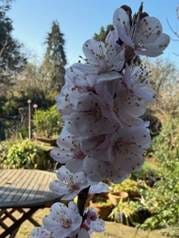
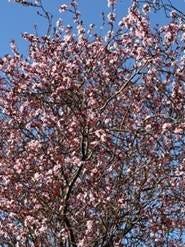
Thank you to those who’ve said ‘Haven’t you seen?’ and showed me a plant, shared a line from a poem, illumined words of Torah. During lock-down I received as many photographs of nature as questions about Jewish law. ‘What bird is that?’ ‘Have you noticed how the Judas trees have begun to flower!’ (In Hebrew they’re called clil hachoresh, the crown of the forest.) How poorer we would be if people didn’t hold out a candle and say, ‘Look there! See this beautiful world!’
I honour everyone who’s said: ‘Contribute more!’ People dedicate themselves to so many essential concerns: ‘We do therapy with horses and dogs for people who lost family in the fighting in Israel and Gaza.’ ‘We’re training local women to support victims of rape after the war in the Balkans.’ ‘Will you join us planting hedgerows and mini forests in Barnet?’ ‘Help me support these refugees who’ve nowhere to sleep but the streets.’ What can I say? You light pathways into worlds that desperately need our care. You illumine the road of conscience.
I’m thankful to colleagues of all faiths with whom we’ve stood against the hatreds that distort religion and cut deep wounds of violence into our world. Together we have striven to affirm the true oneness of God, whose spirit flows through everything making all life sacred.
I’m grateful for the prayers, music, poetry and Torah, which have led us to the hidden, holy core of life and held us there, even momentarily, so that we may know it and be at one. All these are lights which kindle my, and your, inner light. I shall try, as we all do, to stay faithful to the light with which I have been entrusted.
May God’s light, present in all life, illumine the path of goodness and compassion for us all.
I see the lights of Chanukah reaching out into the darkness. Chanukah is a festival of hope, courage and inspiration and we, and the world, urgently need them all.
But now, not only after Bondi Beach but at the close of a cruel year, that darkness feels deep indeed. My Christian friends speak similarly as they approach the celebration of Christmas. We, and the Muslim colleagues who sent words of sorrow and solidarity, share the simple prayer: ‘May the light prove stronger than the darkness.’
It’s a prayer addressed to each other, ourselves and our governments, as much as to God. We need light. That doesn’t mean that we can ignore the hatred, cruelty and contempt abroad in our world. But I won’t detail them here. I will focus on the light, because we need it so badly.
On a personal note, the second day of Chanukah is the Yahrzeit for Raphael’s and my mother, Lore. She left us a collection of stories, Maerchen in German, fables in poetic prose. One of them concerns a little boy who is terrified of the dark and gets lost in the forest in the pitch-black night. Yet coming, panic-stricken and exhausted, upon a clearing, he sees the bright moon and stars and hears the swaying of the trees. He stops, breathes in, and stands still in wonder: ‘I always knew it,’ he says to himself, ‘beyond the darkness there is light.’ I think now that, knowing she was dying, our mother wrote this story as a message to her two young boys, and to herself.
Returning to Chanukah, the date marks the repossession of the Temple by the Maccabees. Who knows what they actually thought as they contemplated the ruined precincts? Their battles weren’t over. Right next door stood a fortress still in enemy hands. Yet the Talmud chooses to tell us that the first thing they did was look for light. Whoever the editors of the Talmud were, they wanted this to be the message of Chanukah for future generations: Seek light! Whatever the darkness around you, seek it out! And when you find it, even if it’s just one tiny jar, even if you think, ‘This won’t last. It’s a mere nothing! It’ll be out before it’s lit!’ – go ahead and light it.
That, taught Rebbe Yehudah Aryeh-Leib Alter of Ger, is where the miracle of Chanukah’s eight days begins, not in heaven, but on earth. Eight, he wrote, represents transcendence, seeing beyond. In kabbalah, the eighth sacred quality if we count upwards, is binah, intuition. It’s the insight that beyond, and within, everything, even in the heart of darkness, resides God’s spirit. There is an inalienable holiness, and inextinguishable point of light, at life’s core.
On Chanukah that or haganuz, that hidden flame, is kindled on our Menorah and placed not in secret, but overlooking the highway, in the public square. Hope and light must be ‘out there,’ a call to courage and the strength of collective goodness.
The Talmud asks, and then confirms, that ‘we may light one candle from another’ directly, flame to flame. This represents the truth that one person’s light, creativity, kindness, bravery inspires others, who inspire yet others about whom the individual who lit the first flame will never know.
So we must never say: ‘It’s too little. The darkness is too thick.’ Despite everything, let the lights of courage, inspiration, creativity, companionship, goodness, kindness, determination and hope shine forth into the coming year.
My article from The Observer, Monday 15 December 2025:
Shocked and horrified, but not surprised: these words of Alex Ryvchin, co-CEO of the Executive Council of Australian Jewry, after Sunday’s attack on Bondi beach, were almost identical to those of chief rabbi Ephraim Mirvis in response to the killings at Heaton Park Synagogue in Manchester on Yom Kippur.
Both attacks targeted the community as we honoured the sacred festivals of our Jewish year. The annual gathering on Bondi Beach to celebrate “Hanukah by the Sea” is a great event in the calendar of Sydney Jewry, taking place in the heart of the community. It marks the lighting of the first candle in the eight-day festival which celebrates hope and courage. It’s a time of light and joy; there was a petting zoo, face-painting and fun activities for all the family.
Instead, this open and welcoming celebration was destroyed by fifty rounds of gunfire, leaving 16 dead, some 40 seriously injured, thousands traumatised, a country feeling shattered and Jewry round the world in grief and anguish.
The Jewish community is closely connected. It wasn’t long before I began receiving messages: “My niece was there. She had to run; she’s distraught.”
“My sister lives in Sydney, I was so worried, but for some reason she didn’t go to the beach.”
“My relative is about to have his second operation.”
Once again, I find myself thinking of Yehudah Amichai’s poem The Diameter of the Bomb: those killed are at the epicentre, but the shockwaves spread ever wider, reaching those who weep on distant shores at the other side of the globe.
Even if nobody we know was there, the horror reaches home: “It feels like it’s encircling us,” a congregant tells me. He means the pervasive ether of anti-semitism. Some of it poses as anti-the State of Israel.
There is indeed legitimate criticism of the Israeli government. Such criticism is shared by many Jews who passionately care about Israel and pray for the wellbeing of all its citizens. But the pervasive rhetoric of cult-like hatred directed against the whole country of Israel effectively targets all Jews. It slides all too readily from murderous words to graffiti, murderous threats and murderous acts.
The Executive Council of Australian Jewry logged 1,600 antisemitic incidents in the year to September 2025.
The massacre on Bondi Beach, said Alex Ryvchin, was “the logical conclusion to what’s been simmering in this country for two years.” His own home was fire-bombed earlier this year.
As communities round the world lit their first Chanukah candle last night there was a spirit of solemnity and sorrow. At a gathering of hundreds in my synagogue we prayed for the wounded and expressed our heartfelt solidarity with the grief-stricken.
But there is also a spirit of resolute determination. Chanukah celebrates resilience and courage. As Rabbi Jacob Blumenthal, CEO of the Rabbinical Assembly wrote: “the act of bringing light into a very dark world is one of defiance, faith, and hope. We trust that, with God’s help, we will see light prevail over darkness, and righteousness overcome evil.”
We take strength from the amazing intervention by Ahmed al-Ahmad who showed unimaginable bravery in overpowering one of the gunmen, and who was himself wounded. As Imam Qari Muhammad Asim wrote in a moving message to the British Muslim Network, his courage “shows the true values of Islam”. Both Jewish and Muslim sacred writings teach that whoever saves a single life is as if they had saved the entire world. Ahmed al-Ahmad saved many lives.
Imam Qari rightly called the attack at Bondi Beach “an assault on the fundamental values of dignity, freedom of worship and coexistence that bind us together. Such acts of terror are a betrayal of our common humanity.” That common humanity needs common defence by us all.
We therefore also take strength from similar messages from many Muslim and Christian leaders. We stand together not only against antisemitism but in determined opposition to all forms of hatred and racism. It is essential that across our societies, in Australia, Britain and worldwide, we affirm our shared humanity not just in words but actively, by working together for the good of our whole society.
Above all, we find strength in the deep resilience of Judaism which sees in the human spirit an inexhaustible and unquenchable source of light. As we celebrate the next seven days of Chanukah, we kindle that light in the public domain, sharing our determination that understanding will conquer hatred, that goodness will overcome evil and that cruelty will be vanquished by compassion.
As I near the end of my time as Senior Rabbi of my Synagogue I feel complex emotions. I am deeply grateful for the wonderful New North London community and the hundreds of people who have enriched my life. I feel loss, bewilderment, and uncertainty about my future. But I don’t doubt my decision to retire, and have every confidence in the congregation’s future, with its caring and committed membership, dedicated lay leadership, devoted professional team and excellent rabbis.
I also have plenty of fight still in me, and will continue to work with energy and love for everything I care about through my continuing role as Senior Rabbi of Masorti Judaism and in the worlds of climate, nature and interfaith.
After more than a thousand contributions to Shalom NNLS, these are some of my last. I am glad my colleagues are taking over these weekly messages and am moved by their thoughtful words. I will continue to write regularly for Masorti Judaism; you can follow me at https://jonathanwittenberg.substack.com/, or you may have had enough. For me, this writing has been a kind of listening to my conscience and heart, a conversation with the many people who inhabit them, whose words and deeds have moved me.
After 38 years full time, and several as youth worker and student rabbi before that, I find myself reflecting back on how I felt all those decades ago. I was hesitant and afraid: Would being a rabbi eat me up? Would I cope? Would I love committees? Underneath it all was the deepest question: did I honestly believe in God?
Reality has answered those questions, but not in ways I’d foreseen. The privilege of rabbinical work has deepened me. People, with their joy, tears, griefs, fears and loneliness, have shown me inner spaces, both in themselves and in me, that I didn’t know were there. Listening has unlocked chambers of the heart I had never before entered. I hold there echoes of countless people’s words, resonances of love, wonder, anguish and sorrow, which I will garner carefully until I die.
As for God, I have found not answers but moments of response. Actually, that’s not true: they have found me. I haven’t seen the light and had all my doubts resolved. You won’t find me preaching God at Speaker’s Corner. I dislike dogmatic certainties and have little time for knock-down theological arguments. They frighten me. I have no answer to why there’s so much injustice, cruelty and destructiveness in the world, other than feeling sorrow and grief. But I somehow sense that God is sorrowing too, just as God takes joy in the trees, birds and animals, is present in every form of consciousness and resides in the human heart.
I’ve heard no great voices from heaven, and I’d be locked away if I claimed I had. But I have, just sometimes, overheard the still small voice of wonder and been chastened by awe. Such moments have evoked in me, as they do in others, a feeling of relationship and responsibility. I don’t question them; they question me: Are you there? Do you care? They tell me that I am answerable to something infinitely resilient yet infinitely vulnerable. They put in my heart the knowledge that I must not hurt, must never drive this sacred presence away.
I don’t need any more than this.
As for my question about loving committees, the committee making the decision is still out.
I went to bed on Wednesday night unable to get the chorus from Beethoven’s Ninth out of my head.
We’d just held our EcoJudaism vigil in Parliament Square, timed for the start of COP 30. Rabbis from every denomination, including the Chief Rabbi, were there (you don’t often see us all together) and children from Alma school. Nearby, a group of anti-Brexiteers blared out music, with frequent repetition of that Ninth – but they couldn’t drown us out.
Standing there, holding the banner with ‘Tend and preserve God’s world’ writ large in Hebrew and English, I couldn’t help but think of Schiller’s Ode to Joy which Beethoven took for that chorus:
O joy, O wondrous sparks divine… All humanity shall be brothers… With your magic bind together What we’re accustomed to divide
I’ve always had a love of nature, animals and trees. I was taught to get my hands in the soil, not pick apples before they’re ripe, reach between the thorns for gooseberries, enjoy the woods behind the house, hold my hand flat so that a horse could take the sugar lump. I love it all still, only more so.
For as I’ve got older, that love has deepened into an intuitive sense of kinship. It’s not just fellow humans whom we should treat as sisters and brothers. Must the ‘us and them’ divide between humans and all other life be quite so absolute? Doesn’t one vital energy flow through us all, one spirit from the one God, bestowing consciousness on every creature, each according to its nature? This is how kabbalah understands creation, the emanation of the divine from the unknowable depths of God into the heart of every life, where, enclosed within our bodies, it calls out to know it.
We humans have far greater intelligence and agency, and therefore mitzvot, God-given obligations, to use our powers well. But the same earth will wrap us round in the end, our spirit will rejoin the great oneness, and the roots of trees will carry what was once our body up into the branches and leaves.
Therefore, as the first commandment ‘Love God!’ requires, we must cherish our fellow creatures. I worry for them every day, foolish as it sounds, the green woodpecker that occasionally feeds on our lawn, the hedgehogs rarely seen now on the heath. As the second commandment, ‘Fear God!’ demands, me must prevent the earth’s ruin. I feel like a partner in treachery when fields are poisoned and seas throw up plastics and the creatures they choked.
‘If the Torah says, “Love God” why does it add, “Fear God”’? asks the Talmud before concluding ‘Do both!’ (Yerushalmi Sotah 8:5) But love is better: ‘He prayeth best who loveth best / All creatures great and small,’ said Coleridge’s Ancient Mariner. That’s the essence of both our moral and our spiritual lives.
Yet the fear is real. It’s not awe; awe humbles. It’s visceral fear, for the children, animals, life itself; for this beautiful world, God’s world. ‘Don’t destroy my world,’ God tells Adam and Eve, ‘Because no one can come after you to put it right.’ (Kohelet Rabba) This is summed up in the two-word commandment: ‘Bal Tashchit, Don’t destroy.’
We must act from both fear and love.
I’ll end with Sean Ronayne’s dedication to his unborn child Laia in his beautiful book Nature Boy: ‘You owe me nothing in life, but I do have just one wish. All that I ask from you is that, one day, you fly the flag for nature… love it as it so deserves…and give it the voice it needs.’